

by Ersun Augustinus Kayra, RIGA
On the map, Riga is a capital. From above, you see ministries, embassies, tram lines and a serious bridge. On the ground, it often feels like something more modest: a city where the public realm is stitched together by small, almost shy courtesies – the way people stand on the tram, how they use their voices in stairwells, the tempo of a queue at the market.
For visitors, Riga is easy to love for its façades: the Jugendstil faces staring down from Alberta iela, the old warehouses at Spīķeri, the riverfront at sunset. For newcomers, especially those who plan to stay, the real learning curve is less visible. It lies in the micro-rituals that keep a small capital functioning without anyone having to shout.

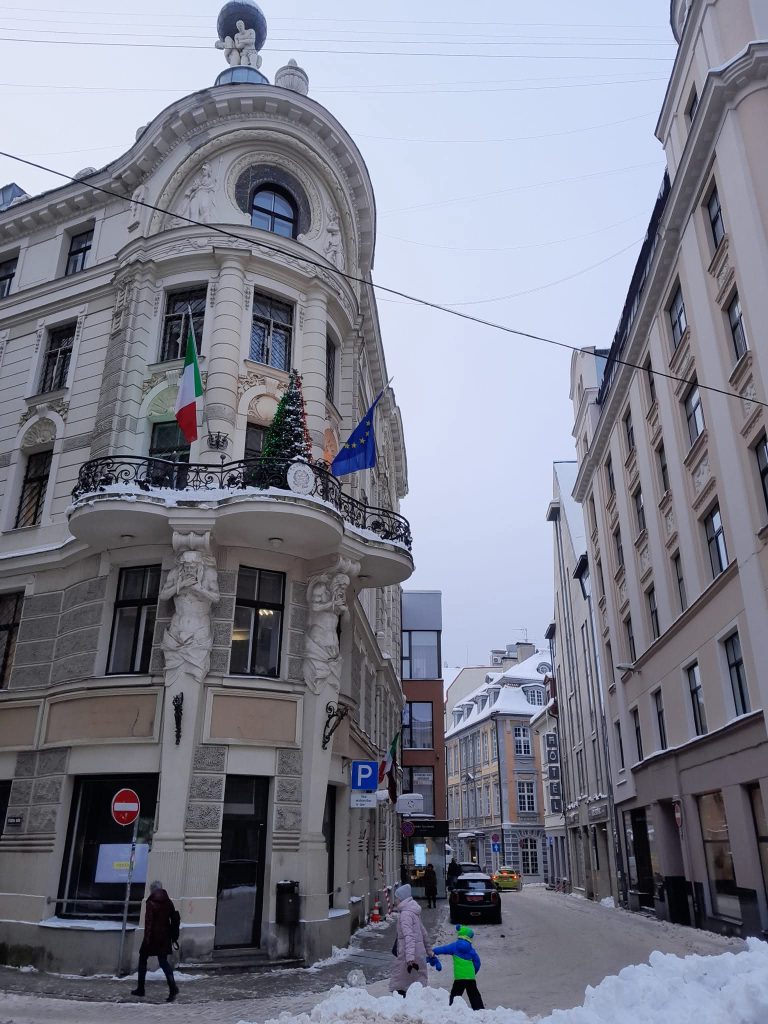
The tram as a moving classroom
Your first teacher is often tram number 11. You step on in the centre with a slightly oversized backpack and the guilty feeling of someone who has not yet understood the choreography. The doors beep, the tram jerks forward, and suddenly you are part of a narrow, shared tube of air.
Riga’s trams are not brutally crowded; there is usually enough room to stand without being pressed flat. But there is a strong, unspoken grammar. People move in a way that lets others pass to the validator. Bags are tucked in, not left swinging. Elderly passengers are scanned for in the periphery of vision, and the offer of a seat happens with a small gesture rather than a long speech.
There is another layer as well. You hear short phrases in Latvian, answers in Russian, the occasional English word dropped in like a visiting relative. Many older passengers slip between languages with practiced ease, choosing the one that will create the least friction in that moment. Silence, here, is not only shyness; it can also be a way of keeping peace in a carriage where memories run in more than one tongue.
If you come from a city where politeness is announced loudly – “Please move down the carriage!”, “Let the passengers off first!” – Riga’s tram etiquette can seem almost too quiet. No one lectures you. Instead, the rebuke comes as a soft, collective exhale when you block the doorway, or in the way people subtly rearrange themselves to correct your mistake. You learn quickly. The validator beep becomes a small marker that you belong: you know where to stand, when to step aside, how to tap in without turning it into a performance.
Queues in a city of limits
Riga is not a huge city, but it knows what it means to live with limits: of salaries, of time, of winter daylight. Queues – at the central market, at a small bakery, outside a clinic – are places where those limits are negotiated.
At first, the market feels chaotic. Fish, flowers, cheese, people crossing each other’s lines. Then you notice the invisible rails. Each stall has its own micro-queue, a loose but respected line of bodies and eye contact. People keep enough distance to feel comfortable, but not so much that someone can pretend they did not notice the order.
The courtesies are tiny. A tilt of the head to signal “you were first.” A hand half-raised when the vendor looks up: “I’m next.” If someone is clearly confused – a tourist with a phrasebook, an older person counting coins slowly – the collective reaction is rarely open irritation. It is more like a quiet adjustment of expectations: this will take a minute; we will manage.
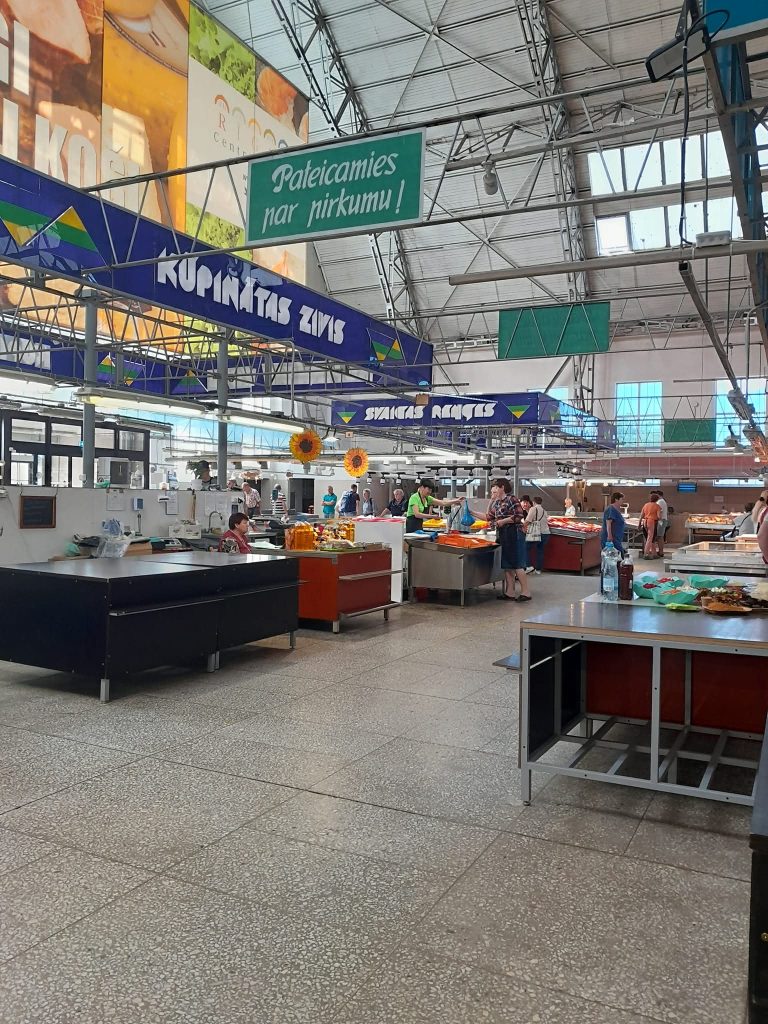
There is an economic realism under this softness. In a place where many people still count the cost of groceries carefully and measure their day in bus schedules rather than taxis, time and attention are not abstract. Standing in line without wasting other people’s minutes becomes its own kind of courtesy. Not pushing ahead is not only “being nice”; it is a way of respecting how thinly other people’s resources may be stretched.
For someone arriving from a city where queues are either aggressively policed or completely absent, this gentler discipline can be disorienting. You are trusted to read the room. You are expected not to exploit that trust.
Stairwells and shared sound
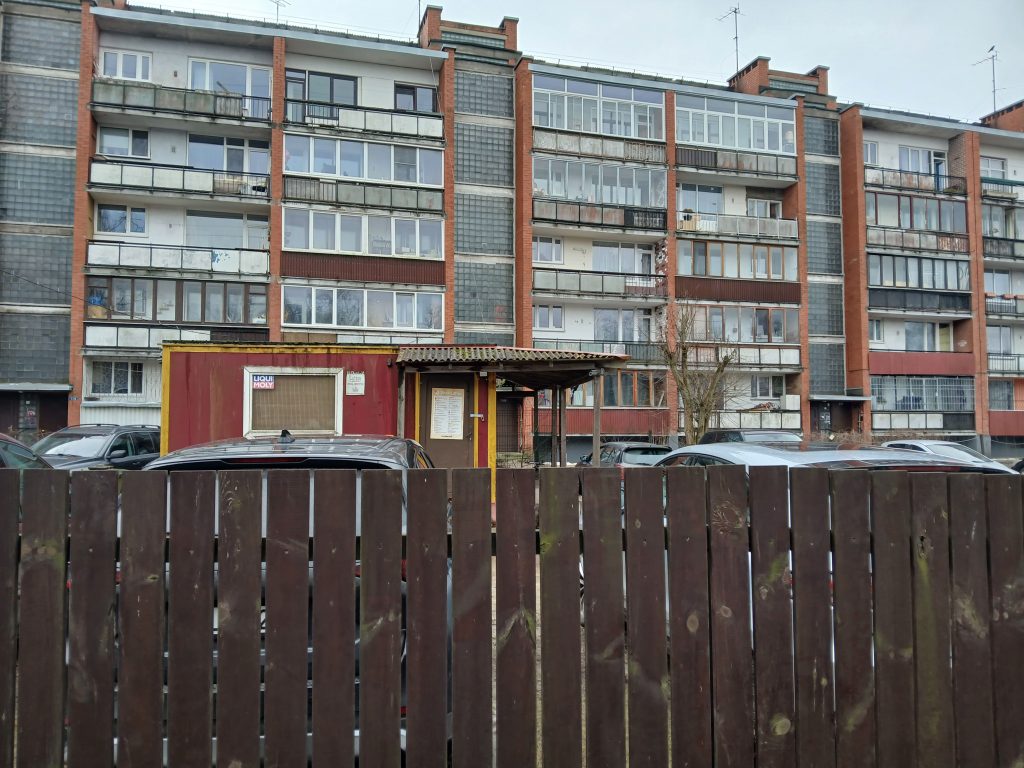
Outside the postcard streets, Riga is a city of stairwells: Soviet-era blocks, interwar houses, renovated courtyards where generations have climbed up and down in winter boots. If you live in one of these buildings, you learn another layer of small capital etiquette: the acoustics of home.
There is no written rule about when you may drill a hole in the wall, how loudly you may speak on the landing, or whether your child may bounce a ball in the corridor. But there is a felt limit – an everyday physics of sound that emerges from walls that are not as thick as they look.
Newcomers often discover this the hard way. One night you take a long phone call in the stairwell, seeking privacy in the echoing space. The next morning, your neighbour greets you with a slightly tighter smile than usual and a careful “Labrīt” (“Good morning”). Nothing is said about the call. The message has still been delivered: we heard more of your life than we needed to.
Riga’s stairwells teach a small but important courtesy: your private life travels. The sound of your day seeps through plaster, under doors, into lives you never see. To live well in this kind of city is to carry that awareness with you when you close your own door.

The river and the right to linger
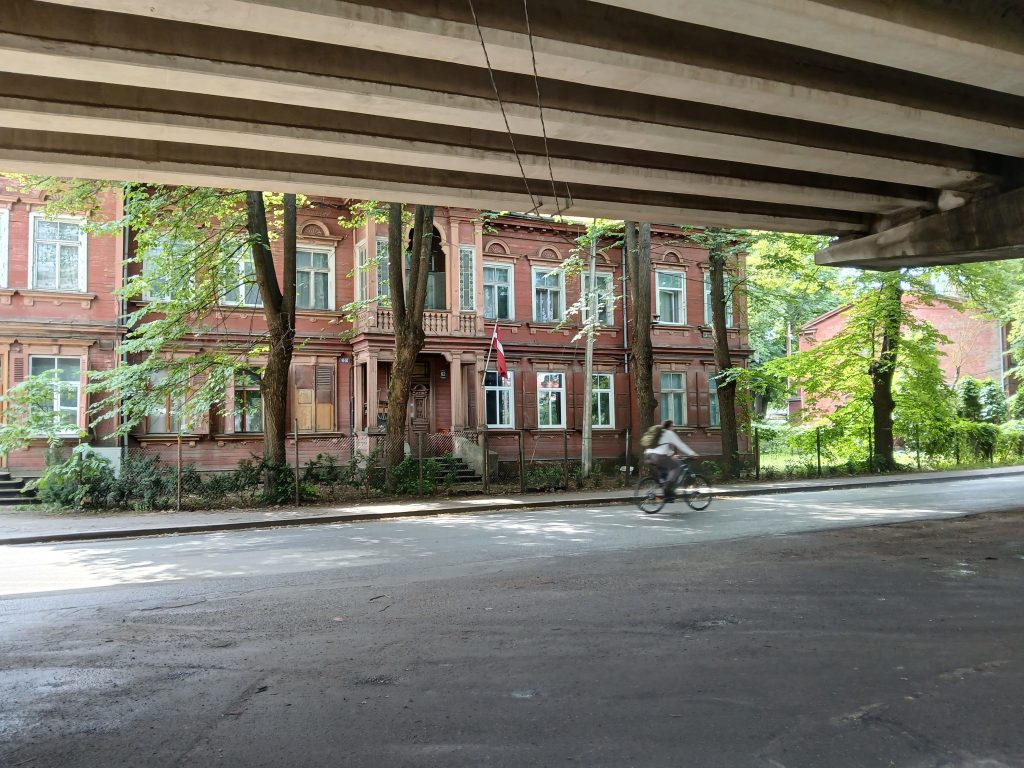
If trams and stairwells are compressed spaces, the River Daugava feels like an exhale. On the embankment, especially on evenings when the wind is gentle, you see the city’s version of public intimacy: couples sitting without talking, families walking in single file, people alone on benches, staring over the water.
In some cities, public space is noisy by design. Parks are full of organised activity, music, events. Riga does have its festivals and concerts, but much of the time the riverfront is low-key. The main courtesy here is not to turn other people’s solitude into a spectacle.
For newcomers who grew up in dense, performative cities, this restraint can be a revelation. You can sit alone without being approached; you can walk slowly without being hurried; you can look at the water without needing a coffee cup as a prop.
The river grants space for the present moment. The streets behind it carry the weight of what came before.
History in the background, not as a script
The Baltic region is heavy with history, and Riga is no exception. Occupation, deportations, independence, renewed insecurity – all of these are part of the stories told in museums and on anniversaries. But in the everyday life of the city, history often operates as a subdued undertone rather than a constant speech.
You feel it in small ways. Older people who switch between Latvian and Russian with practiced ease, but whose face tightens slightly when certain topics arise. Buildings that carry scars in their facades but host cafés with laptops and oat milk. Memorial plaques you almost walk past, until a name catches your eye and forces you to slow down.
Politeness here is not only about individual temperament; it is also a way of moving through a layered landscape without tearing it open at every step. On a tram where two language communities share the same strip of floor, lowering your voice is not simply modesty. It can be a way of avoiding old arguments that nobody has the energy to replay in public.
For a newcomer, there is a courtesy in how you move through this landscape. You do not treat the city as a neutral backdrop for lifestyle photography. You take a moment to read the plaque, to understand why there is a candle in a seemingly random spot, to learn at least a little about why freedom of expression and a normal Tuesday have a particular weight here.
You are not expected to become a historian. But you are quietly invited not to be amnesiac.
Between state and street
North towards Finland, Estonia has encoded much of its public courtesy into systems: digital ID, X-Road, transparent logs. In Tallinn, some of the “please don’t make this harder than it has to be” energy has been written into code.
Riga’s courtesies live more in the street than in the server. The Latvian state has digitised many services, but the everyday experience of institutions still feels closer to traditional bureaucracy: counters, forms, phone calls that ring for a while. The contrast is instructive. In Riga, the state does not absorb as much of the burden of coordination. People do.
That means the tone of a queue at the market, the behaviour on a tram, the noise level in a stairwell are not decorative details. They are part of how a small capital compensates for limited capacity. When resources are thinner, the way citizens handle each other matters more.
Reserved kindness without spectacle
Riga’s kindness is easy to miss if you look for grand gestures. It operates in smaller denominations: a bus driver who waits a little longer when he sees someone running, though he will pretend not to have done so; a neighbour who knocks to tell you your door is not fully closed; a market vendor who rounds your total down by a few cents instead of up.
There is little ceremony around these acts. They are not framed as “hospitality”; they are more like a quiet insistence that people should not make life unnecessarily difficult for each other. Warmth is often wrapped in stoicism. You may not get enthusiastic small talk, but you get reliability: the tram comes, the shop opens, the pharmacist takes your question seriously.
For newcomers from cultures where hospitality is expressed with overt enthusiasm, this can feel distant at first. Over time, you start to recognise the local currency. A city that leaves you alone when you want to be alone is not indifferent by default; sometimes it is simply respecting your right not to perform.
Learning to be visible without taking over
Riga is not drowned in visitors in the way some European capitals are, but the flow is increasing: low-cost flights, cruise ships, stories of “undiscovered” Baltic charm. At the same time, the city is home to long-term newcomers: students, workers, people from neighbouring countries who have come for a quieter life or a different kind of tomorrow.
The challenge, as in many small capitals, is how to be visible without taking over. The city’s courtesies offer a hint. Stand where others stand – in the narrow wedge of space by the tram doors, not in the middle of the flow. Let the queue at the cheese stall keep its own loose order. When you photograph a window or a courtyard, consider buying something small from the bakery or café that keeps the lights on behind it.
Learning to belong is not just a matter of learning words like paldies (“thank you”). It is also about absorbing the local scale of impact. In a megacity, one more loud conversation or careless photo rarely changes anything. In a small capital, your behaviour can noticeably tilt the atmosphere of a whole tram carriage or the mood of a single stairwell.
You may come for the façades. You begin to belong in the spaces between them.
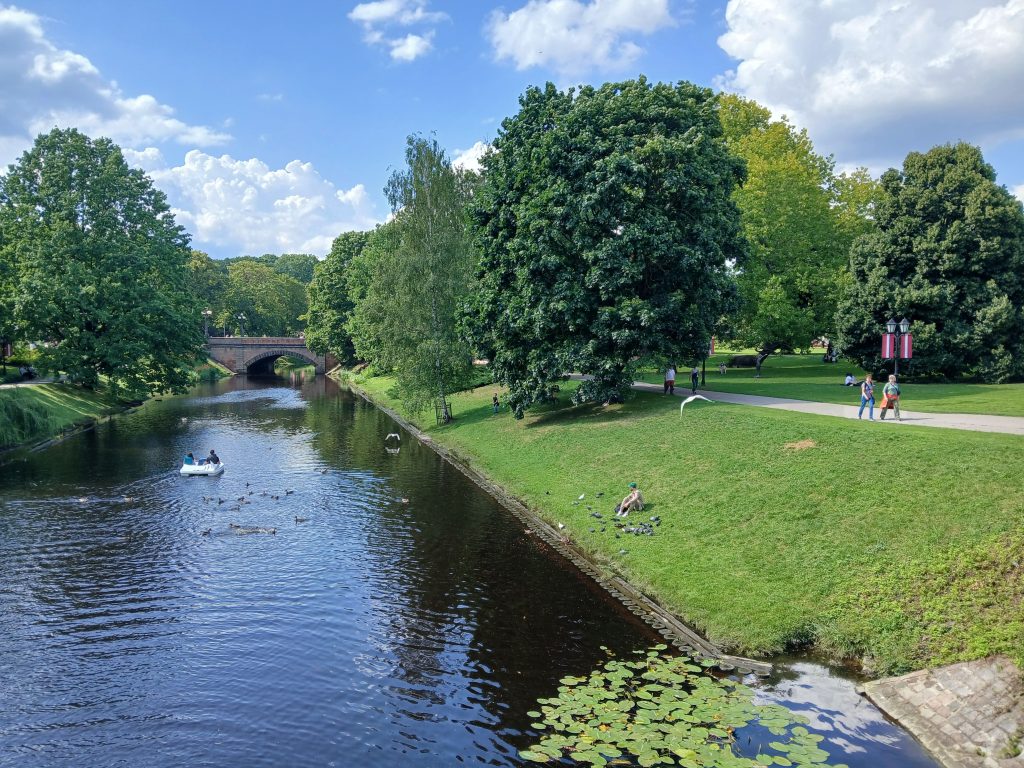
All images credit – Will Mawhood
Ersun Augustinus Kayra is an Istanbul-based writer exploring how small rituals of courtesy shape life in cities, islands and digital societies. His essays have appeared in Le Devoir, Stimmen der Zeit, Plough Quarterly and Le Verbe.
© Deep Baltic 2025. All rights reserved.
Like what Deep Baltic does? Please consider making a monthly donation – help support our writers and in-depth coverage of Estonia, Latvia and Lithuania. Find out more at our Patreon page