
by Vilis Kasims, RIGA
Once I was sitting and reading on the Number 3 trolleybus, on the way back from university. It was afternoon, the weather was nice; I wanted to get home as quickly as possible, have something to eat and then go out in the sun for a bit. Then up came a visibly intoxicated man, who demanded “oi, are you a Russian or a Latvian?” A moment went by before my brain processed the question and I answered, automatically, “I’m neither”. Even more taken aback than I had been, the man unsuccessfully tried to focus on me. Then he asked again: “no, are you a Russian or a Latvian?” I stuck to my previous answer, and he clumsily tried to grab me by the jacket. As we were struggling there, a middle-aged man who had been sitting nearby came up and together we pushed him off the bus. Once I had thanked him for helping me out, he shook his head and reproachfully said “don’t be ashamed to say that you’re a Latvian!” I couldn’t find any words to respond other than “but I’m really not one”.1
At least back then, there was no room for nuance in Riga. There were Latvians and Russians, and each of them had to choose a side. Just like in a football derby, where the only ones who could be neutral were the tourists.
Both during that afternoon’s walk and over the weeks that followed, I repeatedly mulled over what had happened and the answer I had given – why it was that I had so insistently refused to identify myself as a Latvian. It wasn’t that I hadn’t given ethnicity any thought before that, even if only observing with gentle irony how my coursemates neatly split off into Latvian and Russian groups, or listening to the conversations during the holidays, when first of all one side of the family would discuss historical Russian injustices, and then – maybe the next day or maybe at Orthodox Christmas – the other half would talk disapprovingly about Latvian nationalism.
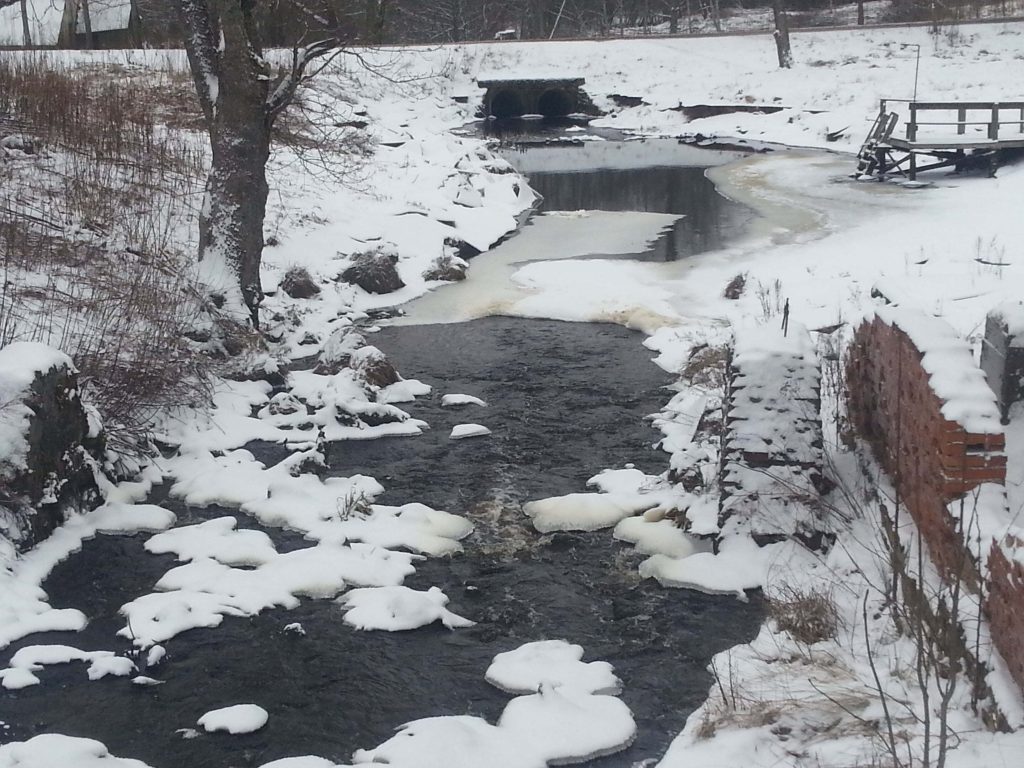
I didn’t consider myself a Russian; there were no grounds for doing so. Although my parents spoke Russian to each other, as did my mother with my brother and me, it was in fact her third language. Using it was simply a practical decision, and a result of russification policies. But that still didn’t automatically mean that I was a Latvian. To declare that I was would mean rejecting the other half of my identity, rejecting my mother. At least so it seemed to me then.
I can remember with surprising clarity the moment when I became aware of my bilingualism. I had recently turned six, and several months earlier we had moved from a flat to a prefab at the other end of Zaļupe. But I had spent most of the summer in the streets and parks of the village, playing with my friend Uldītis, and so the house still seemed a little unfamiliar. I didn’t feel quite used even to the room I shared with my brother upstairs, even to the bookshelves there.
This was partly because I had only learnt to read some six months or so earlier and the books in the room were mostly my brother’s. It was for one of these in particular that I was looking – he had refused to read it to me, because, he said, I wouldn’t understand it. What nonsense, I understood, if anything, too much – wasn’t that what my mother sometimes said before switching to Gagauz when talking to friends?
“So, where is that книга?” I thought to myself, not even saying it out loud. But something in those words made me stop and frown. They didn’t sound correct. And then, without having taken my eyes off the books’ colourful spines, I finally got it. I was looking for a grāmata. Not a книга but a grāmata. That was how you said “book” in Latvian, wasn’t it?
I grew up with two languages, both in my family and in the village, and initially they were indivisible. Like the heavens and the earth before God’s intervention. With my father I spoke Latvian, with my mother Russian. “I didn’t even think about it, it just happened that way” my mother said, when many years later I asked her why she hadn’t spoken to me in one of her two native languages. No, the consequences of colonialism don’t disappear straight away along with the empire’s collapse.
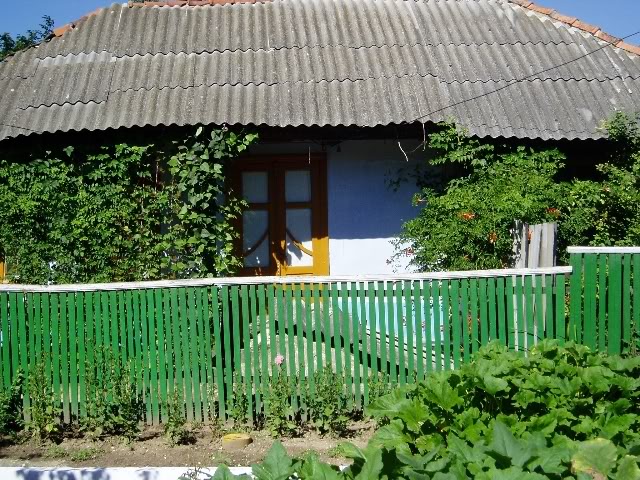
The revelation that the words running through my head could be separated into Latvian and Russian did not at first mean much to me. All I comprehended was that they were in some way different. Probably because books and adults didn’t blend them together the way I did with Uldītis, who was also from a mixed family. And moreover I was aware that in my head Latvian predominated.
I really don’t know why or how this happened. At home Russian was the language heard most often, we had books in both tongues, and the conversations in the village were by no means conducted in Latvian alone. With Sasha from Amatnieku iela I spoke Russian, but with Uldītis and my other village friend Andrejs mostly Latvian. But we often switched over, when one or other of our mums appeared. Bilingualism in our world was the norm, the natural order of things.
It didn’t stay that way for long though. At the school in the nearby town there were just about no Russian kids, and in the conversations I had with my friends from the village too, Latvian gradually became the natural choice. Even with Sasha, when I went over to his house to play durak or 21 for five-santīm stakes.
I began to speak Latvian more and more with my mother too. It wasn’t a conscious decision, there was no specific reason for it, simply gradual adaptation to the Latvian environment of the village, which reduced the influence of Russian. After I moved to Riga, it was no longer the dominant language in our conversations. And now we switch to Russian almost exclusively at particular moments – heart-to-heart conversations, arguments, during work in the fields. And sometimes too when my two-year-old daughter is around, who is already starting to understand more than we would like at times.
My daughter is also growing up with two languages, only for her they are Latvian and English, because my wife is from Britain. The cry: “Gribu more butter!”2 is a constant everyday companion for us, as are attempts to combine both languages into a single whole, for example, in the word “mummy-a”.3 Watching my daughter’s attempts to get the hang of the art of speaking, it’s hard not to see a curious reflection of my own experiences, it’s hard not to think about how I mixed languages myself, choosing those words that were easier to pronounce, which then through repetition became the default choice in the years to come – until society and books finally separated my flood of words into two streams, which continued to flow, each along their own course.4
Every now and then some friend or random acquaintance asks how my daughter manages with two languages, how we work it out at home. The first time it happened this question baffled me slightly, because we had not even spoken about this at home. For my wife and I, bilingualism is so natural that any other option would seem strange. So for now, we each speak our own language with our daughter, trusting to her ability to distinguish between them. And it really does seem that she understands us both equally well, although it’s not at all clear how far she is able to sense that Mummy and Daddy’s speech differs in some essential way. Only once, noticing that I had failed to understand her attempts to say laiva (this sounded like “iv-ee”), my daughter resorted to an alternative: “boat”. And this as yet is the only evidence that she knows that things can have different names, and that some people understand one name better, and some another.
For the moment, of course, my daughter doesn’t think about nationality; she’s never even heard the word. And yet, the languages that she hears from family members, at kindergarten, at friends’ houses and on TV will bit by bit form her worldview, force her to drive her roots into this society. I hope that my daughter will consider herself a Latvian – but not only that. At the end of the day national identity can also be multi-faceted, heterogenous, just like a person can have multiple native languages. They decide neither your nationality nor your support for one or another football team.5
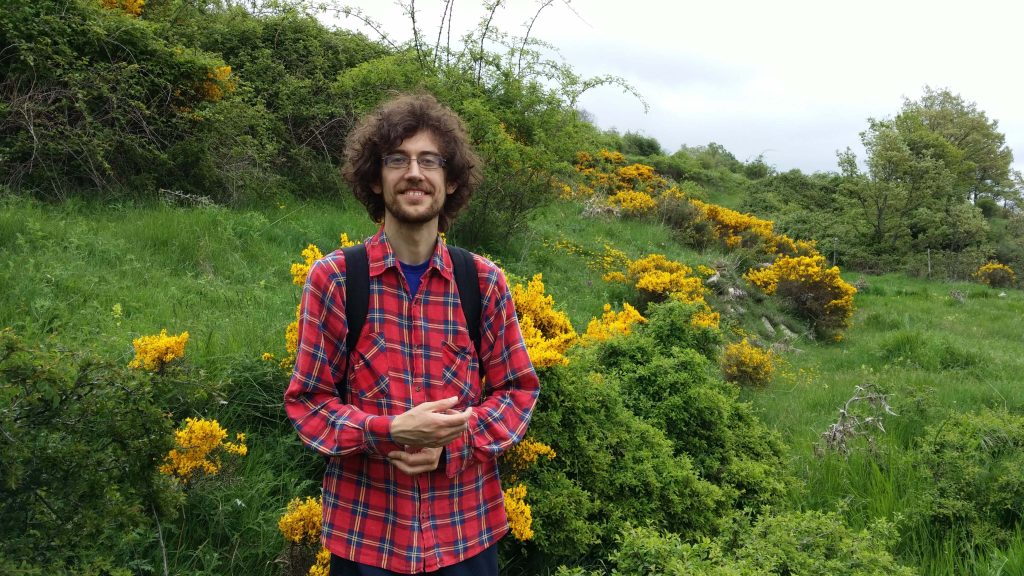
And so, if someone were to bother me on a trolley-bus with that same question again, I would answer that I am a Latvian. Not only because of the war – I’ve gradually realised the seemingly so simple truth that I can be a Latvian and also a Gagauz, and a Bulgarian, and that no one has the right to make me choose only one ethnic identity. Just like I can be a writer and a translator and a husband and a father, and, and, and… We are much more than just a single identifier, and, what’s more, life never stops shaping us – even more than we shape it. To cling to an identity clearly expressible in a single word would, to me, mean denying this simple fact.
1. I assume that the drunk man was prompted to ask the question by the book in Latvian I was reading, which contrasted with my appearance. Although I don’t think that I look significantly different from the average Latvian, I’ve frequently had to clarify my background both to strangers and to acquaintances. And each of these interrogations, however well-meaning (and I really don’t object to talking about the subject), serves as just one more reminder that many here see me as a bit other, a bit foreign. For that reason, I’ve found it easier to call myself a Latvian when abroad – there this kind of self-identification seems simpler, less politicised. It means only that I am from Latvia.
2. “Gribu” means “I want” in Latvian [translator’s note]
3. Feminine nouns in Latvian almost invariably end with “a” or “e”, so this is an intuitive attempt to make an English word work according to Latvian grammar [translator’s note]
4. In the last 20 years or so, my Russian has gradually degraded – something I feel every time that I have to speak it for whatever reason. At the same time, my interest in my mother’s native Gagauzia has deepened – now and then I read the news from there (in Russian), as well as anthropological research (in English and Russian), and I question my mother about the customs there (in Latvian and Russian). I’ve also twice unsuccessfully tried to learn Turkish, which is related to the Gagauz language. Perhaps this is connected with my feeling that this part of my heritage, this part of my identity is less developed, so I have to put in more effort to stop it from atrophying, so that I don’t lose that link.
5. I was a Juventus fan growing up, because I liked Alessandro del Piero and Roberto Baggio. Then for some years football was put to one side, until I moved to Barcelona, where being a neutral wasn’t an option. With languages it’s more complicated. Just because I’ve spent many years speaking English more than Latvian doesn’t make me an Englishman or an American, although, of course, the vocabulary and structure of this language has burrowed its way into my thoughts and my writing. But maybe that’s one reason why I consider language to be only one part of (national) identity. Ultimately, the way you speak when you’re growing up can be far removed from what’s considered correct and proper. And it’s enough to take a look at my compositions from my early years at school to understand – they were highly inaccurate translations from my internal dialect to literary Latvian.
All images credit – Vilis Kasims
Vilis Kasims was born in 1986 and is a writer, translator, and editor. He has worked at the Latvian newspaper Diena and the online magazine Punctum, and continues to write regularly for various outlets. He has published four books, and translates from English, Russian, Catalan, and Spanish. He lives in Riga with his wife and daughter.
This article originally appeared on Punctum. Translated from Latvian by Will Mawhood.
© Deep Baltic 2025. All rights reserved.
Like what Deep Baltic does? Please consider making a monthly donation – help support our writers and in-depth coverage of Estonia, Latvia and Lithuania. Find out more at our Patreon page
