
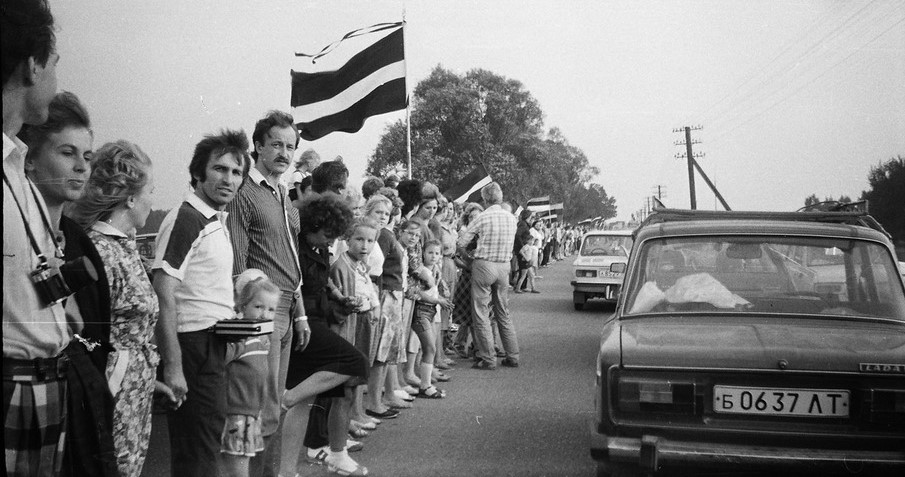
Politics of Uncertainty: The United States, the Baltic Question, and the Collapse of the Soviet Union by Latvian historian Una Bergmane takes as its primary subject a stretch of history which continues to intrigue and spark fierce argument across the world, almost four decades on: the weakening and dissolution of the USSR, from the perspective of its north-western periphery. Bergmane begins by tracing the development of the “Baltic question” from its inception in 1940, as previously independent Estonia, Latvia and Lithuania were occupied first by the Soviet Union, then Nazi Germany, then subject to renewed Soviet domination at the close of the war. The United States and most other major Western countries did not recognise these annexations as legitimate – a stance which held firm for the decades that followed, despite some internal challenges.
This approach had material consequences: the US continued to view the Baltic diplomatic representations in New York and Washington D.C. as the only legitimate representatives of their nations, and the Displaced Persons Act of 1948 specified that 40% of European refugees admitted into the US should come from countries that had been annexed by a foreign power, meaning former residents of the Baltics were very heavily represented. However, despite their continued advocacy for Baltic freedom, the community had little impact on the political scene and in the long decades of Soviet domination that followed it must have seemed that the issue would eventually be forgotten. But the rise of Gorbachev and perestroika suddenly made “the Baltic question” highly salient again. The limited relaxation of controls on freedom of speech and assembly led to protests and commemorations across the region: the former mostly against environmentally or culturally destructive projects, including a dam on the River Daugava in Latvia and phosphorite mining in north-eastern Estonia. The popular fronts that formed in all three countries in 1987 initially had as a stated goal support of perestroika – and it seemed that they would have a key role in the restructuring of the Soviet state; in 1986, Soviet prime minister Nikolai Ryzhkov, on a trip to Tallinn, observed that “Estonia could work out something similar to free economic zones in China” – but Gorbachev turned against the Baltic national movements on realising that their goals increasingly extended to independence. A unilateral Lithuanian declaration of independence in March 1990 led to a Soviet blockade of the republic lasting several months, and a bloody crackdown by special forces in both Vilnius and Riga followed in January 1991, in an unsuccessful attempt to bring the Baltics back into line.
Despite the international condemnation that ensued, with loans and credits to the Soviet Union cancelled from European and North American countries, and British newspaper The Guardian declaring “the bloody end of glasnost”, there were widespread worries in the West that the Baltic push for independence would derail topics seen as being priorities: the unification and consolidation of Germany and the survival of perestroika and Gorbachev. As Bergmane writes in her introduction about Baltic status “This problem at first seemed minor, but as it started to gain more and more international visibility, it risked derailing “the real issues” that actually mattered in the eyes of both Soviet and American leaders—the transformation of the Soviet state and transformation of international order.” French president Francois Mitterand, in conversation with George Bush after the Lithuanian declaration of independence, had warned that “if we go too far, we will get a military dictatorship”. For their part, many Balts and their Western sympathisers felt that this was an opportune window that could abruptly snap shut: as future Estonian president (then foreign minister) Lennart Meri commented in May 1991, “If we cannot solve the Baltic question now, we will not have another chance within the next hundred years.” Bergmane spoke recently to Deep Baltic editor Will Mawhood about this crucial period in the history of the Baltic states and the wider world.
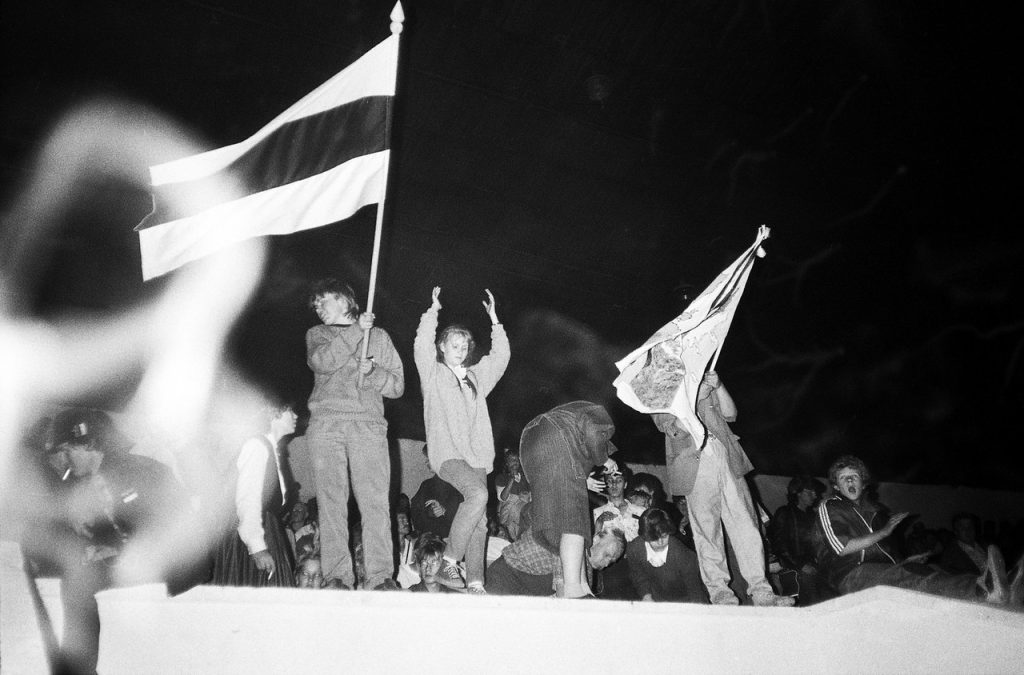
I wanted to start with something I was curious about. When you’re setting out the evolution of the non-recognition policy on the part of the US and other significant countries, you talk about this group of diplomats in the [US] State Department who were referred to by the phrase “Riga axiom” – most famously I guess George Kennan, but also other figures – because they’d served in Riga. Was that simply a coincidence, that so many of them had served in Latvia? Was there some reason for that? And how did that inform their approach towards the Soviet Union – did that make them especially hawkish? What was the significance there?
It was not a coincidence. It was because before 1933 or 1934 – I don’t remember the exact year – the United States did not recognise the government of the Soviet Union. There was no legal embassy or representation, there were no American representatives in the Soviet Union. And so they had decided that Riga would be the place – I don’t know how many embassies they had in other neighbouring countries – but Riga was supposed to be the place from which specialists of Russia would work, and to some extent observe the Soviet Union. And yes, Kennan was one of them, and there were others.
I don’t think it made them especially hawkish, even though the people who were seen as being associated with this “Riga axiom”, they did have a stronger stance against the Soviet Union – for example, Kennan. What was important for the Baltic countries was this very simple thing, that they knew these places. At that time there was still quite a lot of scepticism about the possibility for small states to survive, to exist, to handle their own affairs – they had seen Latvia, but also Estonia and Lithuania, and they just knew these places and they had a personal connection with these places that had lost their independence.
Because, following that, you describe how, in a certain sense, it was the smallness of the Baltics that may have preserved this non-recognition policy – of course, it’s difficult to be sure for definite. But you say that they were in some ways not big enough that the Soviet Union would dedicate really significant efforts to trying to overturn this and they also weren’t big enough really that the US could use them as a bargaining chip. So there are other examples like the Soviet-Polish border, which I know was also very, very contentious, was recognised by the US.
Did it become something that the US and other countries just thought would never really become relevant again?
Yes, I think to some extent that was probably the underlying feeling, not a defined policy or something that people would really articulate.
But I think there were two things: yes, the smallness of the Baltic countries and then at the same time a little bit of disregard towards international law. Probably for the Soviet Union – well, what did it matter to the Soviet Union that according to the Western interpretation of international law these countries were not part of the Soviet Union? It didn’t matter that much to the Soviet Union. At the same time, yes, I think it’s very possible that the decision-makers, even though they practised the non-recognition policy, they probably didn’t really think that this would ever have tangible implications for actual reality.
At the same time, you see how people working in legal departments or who were very much into international law, that for them, because they took international law much more seriously… This is not in the book but I have another article about how and why the Bank of France preserved Lithuanian and Latvian gold, which both the Soviet Union and also the French government wanted to take and use for their own purposes. And you really see how the people who worked in the legal department of the Bank of France, they very seriously asked the question: but what if these countries become independent once again, and what if they then come and ask for this gold? What will we do? Who will be responsible? You see how people’s professions, how it shapes their approach to the world; for those for whom international law mattered, this was a serious and big question, big enough to refuse to hand the gold to either the French government or the Soviet Union.
There were some countries, I know the major example is Sweden, that did take a different approach.
I think also very briefly Australia recognised the Soviet presence in the Baltic states.
Yes, there was Australia, but it was the Labor government [in 1974], and then the next government reversed the decision. And in the Swedish case, that was seen as part of Swedish neutrality.
And many countries didn’t state very explicitly their policy. There were countries like the US for whom it was something that they really insisted upon. But you would also have countries – for example, at the end of the Cold War around 1989, you would have the French foreign ministry sending messages to the other foreign ministries around Europe and asking “have you recognised? [the occupation of the Baltic states] and some of them are like “we don’t know, we need to look in our archives”.
Not a very pressing concern probably, for a lot of them. Although suddenly it did become one.
Exactly.
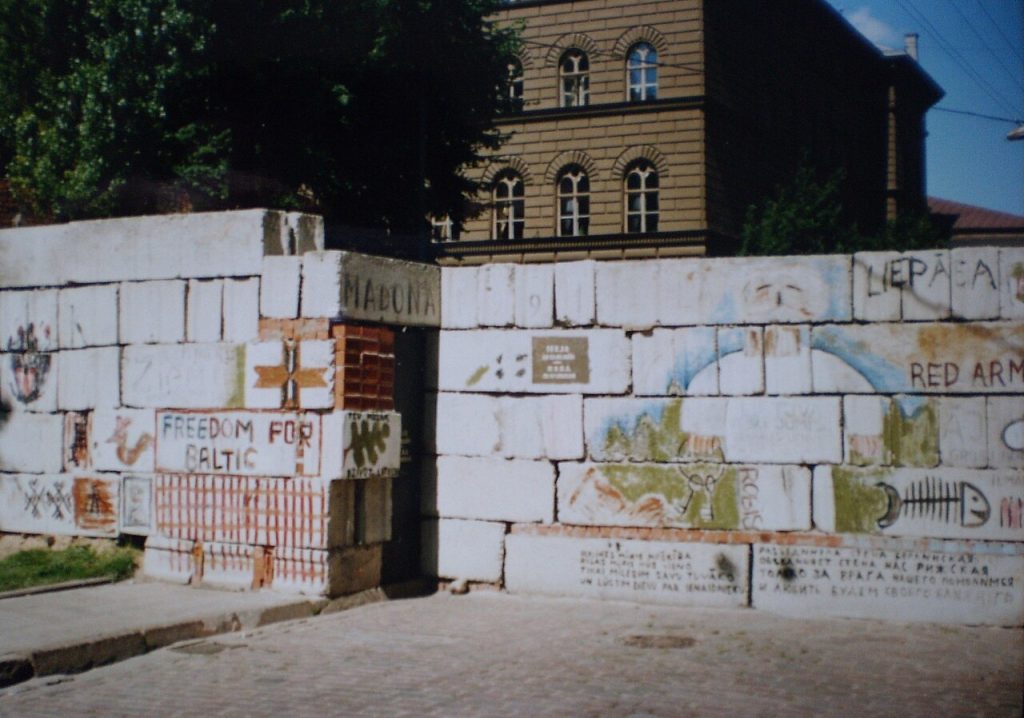
I wanted to move on to the role of the diaspora, which you describe as being actually very important as the impacts of perestroika start to take effect. Of course, this is most relevant in the US, where I know the [Baltic] diaspora is overwhelmingly Lithuanian.
What I was interested in was how relevant was it that the Lithuanian diaspora in the US especially was quite a bipartisan voting group. You describe how the original Lithuanian-American community was quite Democrat-voting – maybe because I guess it was quite a working-class minority originally, kind of New Deal Democrats – but then the ones who come after World War II were much more Republican, which I assume is at least partly because of being motivated by anti-Communism. Was that relevant?
Because as you describe Congress actually become quite activist in this area [Baltic independence], much more so than the presidency under George H.W. Bush wants to be. Even though from the polls you cite, it wasn’t necessarily an issue that the average American was very exercised about.
It did matter, this bipartisan approach, that they didn’t become overly committed to one of the parties. It did matter in the sense that when the question really became pressing, they got support from both Democrats and Republicans. What really mattered was who were the people who were willing to listen to the Baltic diaspora in the voting districts where there were strong communities – if it was a Democrat, if it was a Republican, they would talk to whoever was there. And it was a question that also again for some time, people thought it didn’t really matter and it was quite easy to say “of course we support the independence of the Baltic countries”.
There was a big draw of proximity towards the Republicans towards the end of the period because the Republicans were also so very active as anti-Communists – not that the Democrats were pro-Communist, but it wasn’t such a big part of their political identity. But yes, if we look at the people who supported, who spoke about the Baltic countries, who wrote to the president, we see people from both parties.
I wanted to now ask a little bit about the difference in approach between the three countries, which as you say was not massive – they did operate to quite a large extent in unison.
But there is, for example, this greater cautiousness by Estonia and Latvia compared to Lithuania. For example, instead of making a declaration of independence at the start of 1990 as Lithuania does, which in many ways sets off a lot of the consequences that happen, Estonia and Latvia both say they’re announcing a transition to independence, which will happen at some point in the future. Was there a reason for that beyond simply the presence of much larger russophone minorities in those two countries?
I think that was the main reason. We could also think about how in Lithuanian society there were just fewer challenges or fewer challengers to the idea of Lithuanian independence. Smaller minorities – the Polish minority, as I understand, was quite reactionary, but at the same time Poland didn’t support them in any way, which of course made a big difference.
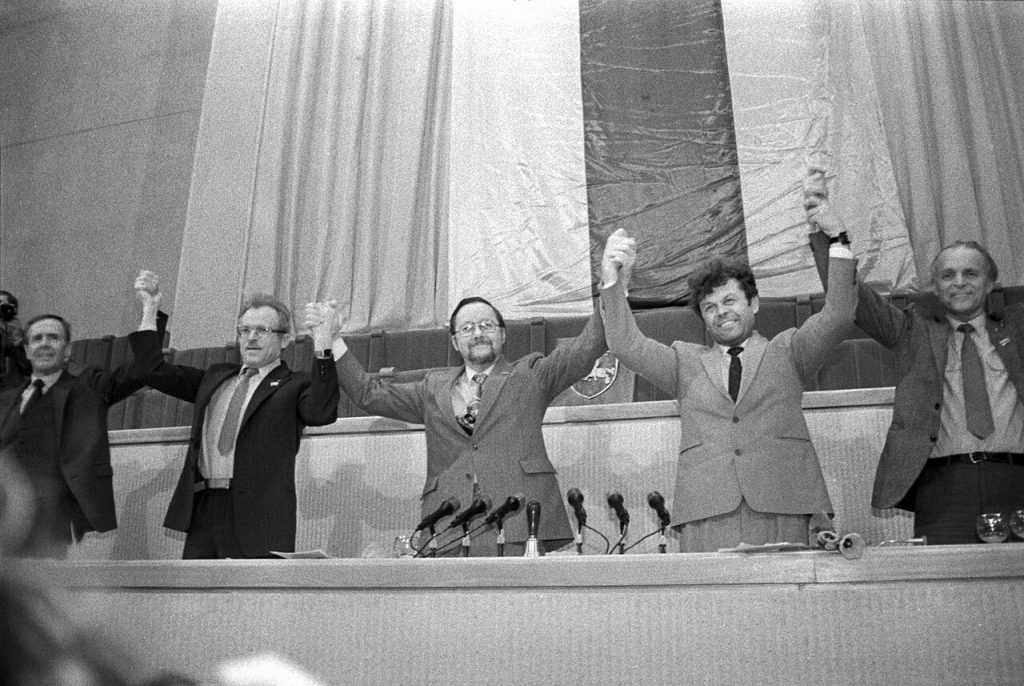
Then the Lithuanian Communist Party was much more united in their support for independence. The Lithuanian Communist Party was also mostly ethnic Lithuanians.
Quite different from Latvia, in particular.
Yes, yes.
I think that, this is speculation, but we can also think about the confidence that people sometimes get from the past. We know that all three Baltic countries had this reference in the past about the independence between the two world wars. But I think that in the Lithuanian case, this idea that they are an old nation that had the medieval Grand Duchy and this kind of heroic medieval past, I think that it was something that to some extent affected how people saw themselves, their capacities, their agency.
But there were also other differences, which I didn’t write about that much in the book. About Estonia and the Estonian Communist Party and Estonian society… I have this good colleague from Estonia, Juhan Saharov, who is writing the conceptual history of perestroika in Estonia. How the Estonians approached perestroika in a very creative way; the Estonian Communist Party was much more open, much more flexible than the Latvian Communist Party. And it started before perestroika, they would have much more open debates about new ideas for the economy, for example.
We can’t reduce that only to this exposure to Finnish television [which could be picked up in the north of Estonia, including Tallinn, during the Soviet occupation]; it’s often said, “well, Estonia had this Finnish influence”. There was, of course, the possibility for people to see how things are different in a country which is just across the Bay of Finland, but there was some sort of more creative, more permissive attitude in Estonia itself, and many of these ideas came from people on the ground, while the Latvian Communist Party was much more rigid. It can be explained by the purges that took place against the National Communists [in Latvia in the early ‘60s], and that these conservative forces won.
Moving on to something you say in the conclusion to the book, which I thought was quite interesting, you said that the uncertainty which is referenced in the title of the book was in this case caused not by a lack of information, but by an excess of information. I assume this being kind of overwhelming and not being able to parse what exactly was important.
It struck me that this doesn’t really apply to Gorbachev in the case of the Baltics. Because what’s quite striking from his behaviour is that he clearly doesn’t understand the situation on the ground, in that he seems to believe – maybe in common with other advisers and so on, but especially him. He seems to have this idea that if the Baltics are given concessions, greater autonomy, maybe more control over the economy and so on, that they’ll be satisfied with that, and they’ll be happy to stay in the Soviet Union, just under different terms.
And it’s clear that by the time he actually goes to Lithuania in January 1990, where he’s very badly received, you say this is far too late – Lithuanians by this point are not thinking in those terms at all; they’re thinking in terms of independence. Do you think that’s an accurate description of Gorbachev, and is that specific simply to him or is that reflective of a wider group within the Soviet Union, that they just didn’t know what was going on in the Baltics or how Balts felt?
Yes, I think that’s a problem of this imperial relation between the centre and the periphery, that the centre very often does not have a very good expertise and understanding of the periphery. And it’s for different reasons. It’s a practical question – it’s a big country; during perestroika they were overwhelmed by the reforms they were implementing, by all the issues that they had to tackle. But at the same time it is a form of some sort of long-lasting imperial arrogance: that these people in the peripheries, they are not important enough to really make the effort and study what is happening. There is quite a lot of these ideas, that we can run just based on our impressions. If we think, in the centre, there is the impression that everything is fine in the Baltics – that is Gorbachev’s impression, and he just believes it. He has this over-confidence, but also a bit of arrogance, that what he believes is the case. There are people who try to warn him. But it is his personal problem, there is a problem of personality, but I think there is also a deeper problem about the structures of empires, and how people living at the centre of empires don’t think that the periphery has importance for the context of the empire.
I think it’s a deeper problem of perestroika: that Gorbachev and people around him, what they did not foresee and what they didn’t expect – and it’s also a sort of blindness of grandeur – there was this idea that: yes, we will make reforms, we will democratise, we will get legitimacy, we will get popular support, because we are doing good things. And with the popular support, we will be able to fight the conservatives and all the bad people who are against perestroika. What they didn’t expect was that these people – and not only in the periphery but also in Russia itself – that they might have their own ideas about how reform should happen. That once they get the freedom of speech, they will not exercise this freedom of speech only to support Gorbachev and his good deeds, but that they could have completely different ideas about what should happen.
And did they believe their own propaganda, in a sense? Even though Gorbachev obviously is associated with liberalising, he didn’t go as far as to say “yes, the Baltic states were occupied against their will”. He still did make this argument that they joined voluntarily. Did he genuinely believe that, and was that a factor in this misjudgement?
That is very hard to say, whether he truly believed it. There is this story about this whole debate about whether the secret protocols of the Molotov-Ribbentrop Pact existed. The big argument on the Soviet side was that there probably were no secret protocols, because we don’t have the copies in the archives of the Kremlin. And there were actually copies in the archives of the Kremlin, and Gorbachev knew it, but he still pretended that they had been lost.
He was somebody who had a talent to make people believe that he shared their thoughts. People who knew him said that he was able to go to a meeting and leave it with people thinking that he was on their side, and then go to the next meeting and say the same to people who think completely differently, but to keep this discourse ambiguous enough that everybody on different sides could invest their own beliefs in what he said. He would say something and I would believe that he agrees with me, and you would still be able to think that he agrees with you.
I wanted now to focus on what was going on within the Baltic states at this time, because you describe how eventually all three countries settled on a path of “restorationism” – so defining themselves basically as countries that had never legally stopped existing, rather than having some kind of idea of a “second republic” that had roots in the past but was a new state in some sense. And obviously this was most significant for Estonia and Latvia because of the massive demographic change they’d experienced, and this informed the approach to citizenship subsequently.
There were challenges to this, including from within the movements. Do you think these countries ever could have taken a different path, for example, the second option I laid out, or was that always unrealistic?
I think in the Estonian case, it was very realistic. In Estonia there was a big debate because the Popular Front [Rahvarinne] actually initially supported the idea of a second republic. Probably not every single person in the Popular Front but many people. And it was a real debate and real competition that existed between the Popular Front of Estonia and these more kind of right-wing or nationalist forces.
In Latvia, there was competition between the Popular Front [Latvijas Tautas Fronte] and these more nationalist forces, but it never became as severe as in the Estonian case, and I don’t think that in the Latvian case there was a very big possibility that there could have been some sort of a second republic. The idea of restoration somehow was much less contested.
This would be LNNK and these kind of forces, you’re talking about. Because the Latvian position on citizenship [whether to grant automatic citizenship to Soviet-era immigrants] did become tougher over time.
Yes, but the decision to restore independence instead of declaring it, it did not automatically mean that if we restore independence we have to restrict citizenship. It was part of the discussion. There was a discussion about what would happen to the Russian-speaking people who came during the Soviet period, but it was not necessarily 100% tied to the question of whether there is a restoration or not.
Because speaking about the russophone minorities in the Baltics, this is used quite a lot by Gorbachev and his team as a way of dissuading the West from supporting the Baltics too strongly.
You have this quote – I think this is from a summit – where he says “dissolution of the state, even partially, could begin a chain reaction of great danger. There are so many territorial disputes around. Within the Soviet Union, people didn’t even notice our internal frontiers. As soon as nationalism appears, they claim borders that are going back to Alexander the Great. Belorussia wanted back the territory given to Lithuania when it joined the Soviet Union.” And then he goes on to speak about Klaipėda [in Lithuania], where there are a lot of Russians, and the fact that in eastern Estonia, there’s quite a large Russian-speaking minority.
And this is also mentioned with concern by Western leaders. Was there ever a possibility that there could have been destabilising violence within the Baltics, which obviously happened other places in the former Soviet Union when it was collapsing? Was this a serious concern? Did they believe it was a serious concern?
It’s hard to say whether they believed it was a serious concern. There is always a possibility of violence in any society – there is nothing about the Baltic societies that automatically makes them completely exempt from any temptation of ethnic violence.
So these are several very interesting questions. One question is why there was no inter-ethnic violence in the Baltic countries. One thing that is obvious is that everybody, both from the ethnic minorities as well as from the emerging national elites, did exercise restraint, and there were moments where this was physical restraint: for example, in May 1990, when Russian-speaking crowds in both Tallinn and Riga were approaching and trying to enter the national parliaments, and there were local Estonians, Latvians trying to prevent them, and it could have escalated very badly but it didn’t.
But also people who were part of the political elite, they never crossed that border. They never tried to incite. Even in terms of discourses or narratives, they never used violence, they never recognised that violence could be an option. Non-violence stayed a very strong norm that could not be violated – and violating it would be delegitimising for whoever did it. So there was this strong adherence to the norm of non-violence. Why this norm was there in the Baltics and not in other places, and why in other places it was violated and not in the Baltic countries – that’s a much deeper question, where you would need to study the whole Soviet Union. But did the leadership of the Soviet Union believe that there was a possibility of ethnic violence? It’s hard to say. But if you read the Soviet-era press, you can see things written there, that if you know the history of the Baltic countries at that time, that were simply not true. Just historically, they were not true. So there was an element of propaganda, there was an element of describing the situation of the Baltic countries as being worse than it was.
And this whole story about the potential problems with the Lithuanian borders – it was Moscow that was talking about it, not Minsk or anybody else. It was a rhetorical tool that Gorbachev used quite a lot. And now there are more and more people in academia who are saying that we also have to look at the perestroika time critically – not to say that everything is bad in Russian history, and so perestroika is also bad, not in this way – but also to see some of the patterns that we can see today, and so we can see the origins back then, or some sort of continuity. So this idea that if you disobey, we will change your borders, because we have tools to do that. This is something that Gorbachev did. He didn’t say that we will invade the Baltic countries. He never said that explicitly, but this idea that if you do this, your borders will change, so think twice. So there is continuity between him and future leaders of Russia.
You make quite clear in the book that the Baltics are not really the priority at any point – particularly for the US, but also for European countries, which vary to a certain degree on how supportive they are, with Germany being probably the most wary of Baltic aspirations. And you quote the National Security Adviser to President Bush, Brent Scowcroft, saying to Bush in early 1990: “We recognized the integrity of the Soviet Union within certain boundaries in 1933, and we do not want to encourage its breakup. Sooner or later, we will have to say it.”
Why do you think this idea has developed that the US was committed to dismantling the Soviet Union, because this is a very common idea that people have: that they were not just ideologically opposed, but that they wanted actually to destroy the state as it existed. If that was the case, then surely the independence of the Baltic states was a perfect opportunity to do that, and as you show, they offered at best token support. The priority was clearly elsewhere: Germany, or even Gorbachev’s survival.
That’s a very good question. I think it comes probably a little bit from the ‘90s. But even then, I was thinking – Bush started to speak in a much more assertive way about his role at that time when he had to run in his next election campaign [in 1992]. He would say “we won the Cold War” but he never said “we destroyed the Soviet Union”, so that didn’t come even come from people who could have benefited politically from being able to say this.
It’s a good question and I don’t really have an answer.
But does this come from Russian narratives, do you think? Because I suppose with the resentment that grows and grows in Russia over time, that’s quite convenient for Russia as a narrative, that the US was always trying to destroy the Soviet Union.
Yes, yes. That definitely is the case. In the ‘90s you can see it already, and then later with the coming of Putin’s regime. The idea that it was, as he said [in 2005], a “geopolitical catastrophe”, it was a bad thing, and that there is somebody who needs to be blamed for this bad thing – either the Baltic countries, or Ukraine, or the United States. It’s this kind of narrative that this was not the will of the Russian people. Even though to a very large extent – and Mark Basinger has written about this in his book about nationalist mobilisation, he argues that it actually was the will of the Russian people to a very large extent. Because if they had wanted to defend the Soviet state, they would have done it, but they didn’t.
So I think, yes, the narrative comes from Russia. But I also wonder why it’s so popular. Because you also have people in the West who truly believe this.
A lot of people.
You’ve written separately I know about what a controversial figure Gorbachev is in the Baltics, for quite justifiable reasons, compared to his image elsewhere. Figures like Yakovlev and even Yeltsin tend to be more well thought of in the Baltics, people who were I guess in the context liberals. But it seems to me that there was always this disconnect between these two groups that was kind of structurally unavoidable, in that those people tended to have a very positive view of the Baltics – I guess not only due to reasons of sympathy for their sovereignty and historical experience but also because they were seen as very developed and in a sense they could be a kind of model for Russia to follow. If perestroika was going to work, then somewhere like Estonia or Latvia might be a good place to try that out on a small scale. But then obviously, as we’ve discussed, the Baltic goal quite quickly or maybe always was full independence, which would remove them from this sphere.
I’ve more than once heard from Russian liberals that the Balts in some kind of way betrayed them, in that they have this idea that Russian liberals in some cases showed a lot of support for the Baltics by protesting in Moscow in very large numbers and so on, maybe supporting in other ways, and then the Balts went their own way and, as they see it, pursued a maximally anti-Russia policy. Do you think there’s any basis for that kind of complaint?
It’s very interesting, and again it’s a question that is part of a larger problematic that I’m actually trying to think about now. It’s a very interesting problem that I wanted to think about and somehow conceptualise it.
That there is an idea in these bigger, often imperial states, or states with imperial pasts, or the elite of these countries – that smaller countries and the people in these smaller countries, that it’s somehow not normal that they pursue their national interest in the same way as the bigger countries do. And that somehow they have a duty of care to these bigger countries. And that happens not only with Russia, you see the same thing in Germany, where Helmut Kohl tells the Lithuanian prime minister Kazimira Prunskienė: you have to wait until we finish with our unification and then you can do your things. But be reasonable; think about us.
But in the Russian case: it is true that it’s very typical of Russian liberals, especially these days, when they are seen as the ones and they see themselves as the ones and they are the ones who oppose Putin’s regime, that everybody else, including those small countries – and especially probably them in the Baltics, because we have some sort of common past – that there is a bit of a duty of care. And it is, I imagine, hard to realise that these states and these societies, they think about themselves first and foremost, as the big states also do.
There is a fantastic article, and unfortunately I don’t remember who was the person who wrote it, but some time around ‘89, after the Baltic Way, there’s an article that appears in one of the big Russian newspapers – and I’ve forgotten the name of this Russian intellectual who had emigrated from Russia and who was living at the time in New York but who was now supporting perestroika. And he writes this column, almost as an open letter to the Baltic countries, saying: well, I understand you, but how can you be so irresponsible and how can you not think about us? What will happen to us – I think he was thinking about the Soviet Union and these kind of progressive forces – if you leave and if because of you something happens to Gorbachev and to perestroika?
And there are similar tactics of this kind of “responsibilisation”. Recently I was working on the Crimean Tatars, and how the Soviet press wrote about them, and again there is this idea that they are irresponsible. How can they dare at this time to ask to return to Crimea when there are all these big problems with perestroika that need to be solved? This idea that these smaller nations, smaller countries, that if they pursue their interests, it’s selfish and irresponsible.
Speaking about, for example, Helmut Kohl asking Lithuania to suspend its declaration of independence essentially for the benefit of Germany, because this would be inconvenient – Germany had by that point unified, but I think he was thinking of prospects for the future. Does it come from a similar place, the narrative – it’s an implied narrative rather than said explicitly – later, when the Baltics join NATO and you have this idea that NATO has come “up to Russia’s borders”? Even though this isn’t really true, because there was already a border with Norway, but anyway. Does that come from a similar place, the idea that the Baltics are being selfish in some way, and that they should I guess sacrifice their interests for the greater good?
On the Russian side, I guess it was seen that way. And in the West for a long time there was not a full understanding: why do they need this, why do they need to be part of NATO? This whole idea of basically – no one would say this explicitly, but why can’t you just live in some sort of Russian zone of influence? Why is that so complicated for you?
Speaking of which, it’s kind of beyond the remit of your book, you maybe just touch on it at the end. People often criticise Western policy for in a sense having excluded Russia from security structures and other kinds of structures after the end of the Cold War. Are the Baltic states always the sticking point that would make this idea that Gorbachev had of a “common European home”, for example, from Vladivostok to Lisbon or Vancouver or wherever, are they the sticking point that would always make that impossible? Or are there other reasons it was impossible? Or is it maybe not impossible?
No, if in the West there had been a strong will to have a trans-European organisation – or, for example, one of the ideas was that the Organisation for Security and Cooperation in Europe (OSCE) would become the key organisation, because the Soviet Union was already part of it, the United States was already part of it, all European countries were part of it – if there had been a strong will in the West to do that, then the Baltic countries would not have been an obstacle. Of course, the Baltic countries would not have been happy to be part of the same security architecture as Russia, because the whole point was to be protected from Russia. But they wouldn’t have been able to do anything about it.
There wasn’t a will for that in the West. And why there wasn’t a desire for that in the West was that – well, Russia was just too unstable in the ‘90s, no one knew what was going to happen there, both in terms of the economy but also in terms of politics. Yeltsin was seen as the best option, but even him – the wars in Chechnya, the authoritarian tendencies around 1993, all of that made Western partners very worried about what kind of partner this country was going to be. And to build your security with one of the pillars – so Russia – being kind of shaky, nobody thought it was a good idea. But also on the Russian side, especially on Gorbachev’s side, this idea of a “pan-European organisation” that would be this kind of common home – it was an effective slogan, but he didn’t really have a plan for it. There was no concrete proposal. It wasn’t that he proposed it and somebody said “no, we don’t want that”. It was just an idea that he was floating around, but it didn’t come to anything tangible.
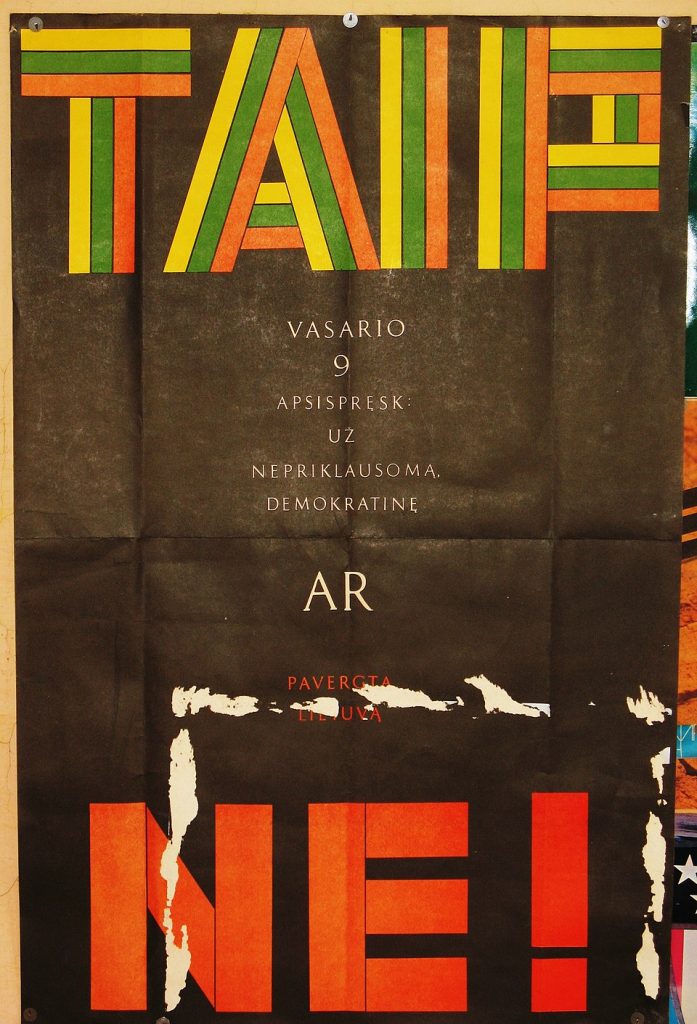
Politics of Uncertainty: The United States, the Baltic Question and the Collapse of the Soviet Union is available now from Oxford University Press
© Deep Baltic 2026. All rights reserved.
Like what Deep Baltic does? Please consider making a monthly donation – help support our writers and in-depth coverage of Estonia, Latvia and Lithuania. Find out more at our Patreon page.
