
by Incognitov, WARSAW
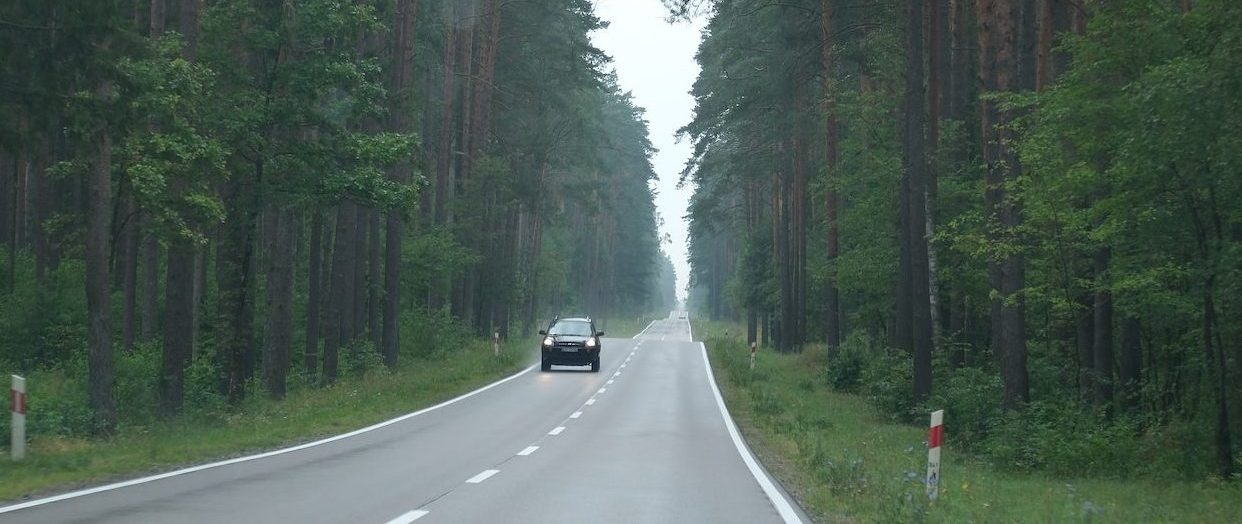
Nearing Suwałki, the cursor on the satnav danced a jig on screen before disappearing entirely. Internet and mobile signals soon followed.
Europe’s governments have issued statements of deep, then deeper, concerns – all in vain. Over the border in Russia’s exclave of Kaliningrad, they say, the forests bristle with signal-jamming devices.
The consequence is that up here in the borderlands of Poland and Lithuania, a man is no longer his digital self. My corporeal self measures nearly two meters on tip-toes – more with arms outstretched, raising a phone to the heavens.
So that’s what I did one fine afternoon in the Polish countryside near Sejny, standing barefoot on the grass and daisies. I saw a plane high above and recalled reading that pilots passing these parts must turn on their radars, as GPS is useless here today. What chance would I have? It would be an extremely offline few days in the Suwałki Gap, for which me and the pilot could thank Vladimir Putin.
The name Sejny is Lithuanian in origin, like most town names in these parts, and according to folk etymology means “the old men”. This forested, sparsely peopled stretch of land in north-eastern Poland once belonged to nearby Lithuania, and before that to the Russian Empire. In much of eastern Poland, locals resisted belonging to much at all, calling themselves Tutejszy or “People from Here” in place of an ethnicity on the census.
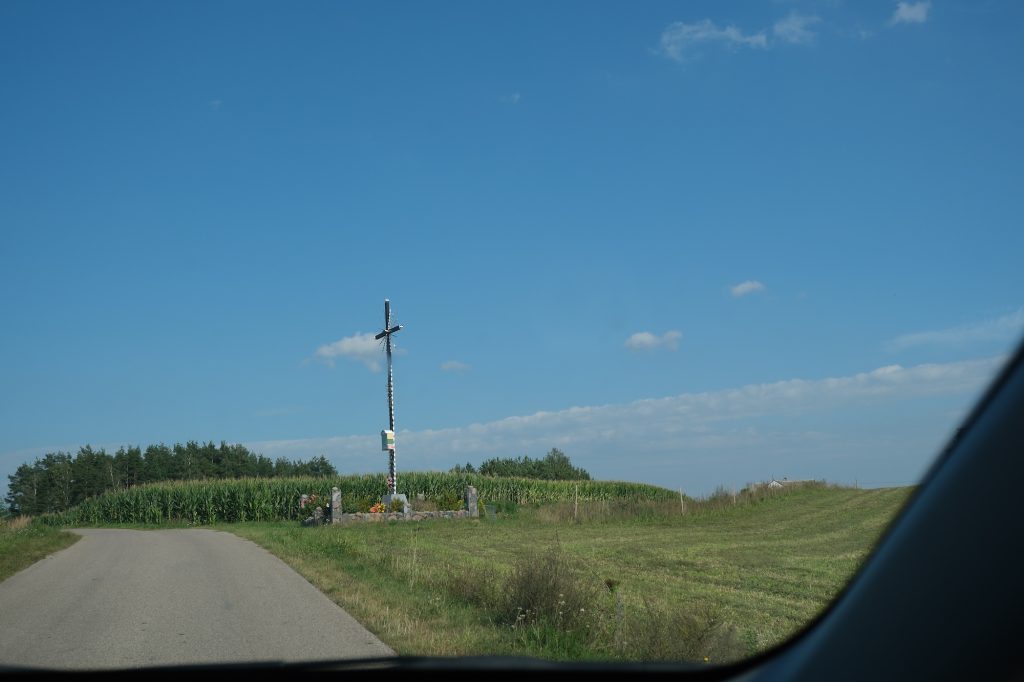
But now it belongs to the realm of possibilities. It’s a place where Things might happen. By the way reporters describe it, you’d have to turn sideways get through the Suwałki Gap. It’s all that links the NATO allies Poland and Lithuania and all that divides Russia’s ally Belarus from its exclave Kaliningrad.
It’s calm in the eye of a cyclone. Some larger cyclones have eyes as wide as the Suwałki Gap itself: 65 kilometres in diameter. Standing there, you can forget what rages around. So it was in the Suwałki Gap that weekend, that place where things might happen, with the buzz of our small black screens muted.
It didn’t feel as a flashpoint should – a relief tinged with journalistic regret. I regretted that regret.
For in their absence there was nothing to do but walk in the fields, eat fresh, warm rye bread and read novels with rediscovered focus. All that was left was to drift off in a hammock, contemplating a dandelion the color of late summer afternoons.
That rye bread, infused with malt and honey the local way, sits on the table of Natalia’s guest house outside the village of Sejny. There are fresh-cut wildflowers. There are home-made jams. The sky is salted with stars. Even the metalhead teenage son of the owner can’t rupture the harmony. You can bet he’s tried. No reporter could resist calling it “bucolic” – the greater the calm, the bigger the rupture.
So when the guesthouse owner Natalia says “Suwałki Gap” she says it in italics with air quotes. “They say we’re at war already, hybrid war, but nobody has told us where we’d go or what to do.”
Since then, the Polish government has mailed an emergency preparation guidebook to every household, but people still don’t know where they’d hide. It’s hard to outrun a drone.
The widespread use of the term “Suwałki Gap” is a masterpiece in public relations. It was coined by Estonian President Toomas Hendrik Ilves at a meeting with the German defence minister in 2015, a year after Russia’s annexation of Crimea. It’s a direct reference to the now largely forgotten Fulda Gap, two lowland areas in central Germany through which the Soviets could have poured tank divisions into the west.
To be sure, there are other flash- and chokepoints in Europe today. The flat Focșani Gate in the hills near Moldova and Ukraine is the entrance to Romania’s lowlands. Russian submarines must pass the GIUK (Greenland-Iceland-UK) gap, an undersea chasm leading to the Atlantic. Unlike these, the Suwałki Gap isn’t even a geographical feature. Its landscape is indistinguishable from the other sides of the border – forests, lakes, the suggestion of hills.
Before Ilves’s creation Suwałki, the regional town of 70,000 for which the gap is named, was not a nowhere but was hardly a somewhere on Europeans’ mental maps of their continent.
Google’s records of worldwide search habits confirms how much has changed. Their data show moderate interest in the term “Suwałki Gap” in the late 2010s. Huge surges in searches for the term followed in February and March 2022 after Russia’s full-scale invasion of Ukraine. Since then, Europeans have come to know the names of the destroyed Ukrainian cities of Mariupol, Bucha and Bakhmut too.
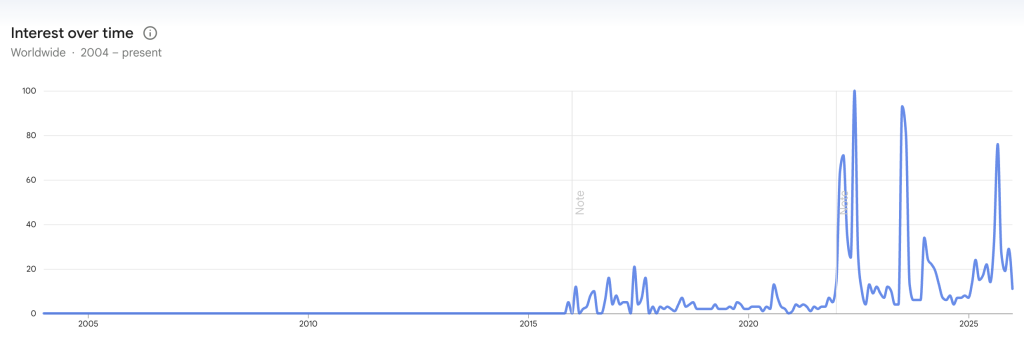
And since then, interest in the term has spiked the most whenever Ukraine has struck back the hardest, in July 2023 after Ukraine’s large counteroffensive began, and in September 2025 as Kyiv’s forces crossed the border into Russia and occupied parts of the Kursk Region. With every successful act of Ukrainian resistance, Moscow issued even more aggressive threats against the West.
The success of Ilves’s new phrase emotionally linked Lithuania’s borders with the very heart of Germany. In doing so, he reflected an unease which has dogged the Baltic states since independence – how to keep western allies invested in the defence of places most Americans couldn’t pronounce. Suwałki today, Paris tomorrow.
Hitler’s appeasers in interwar Europe often stressed the irrelevance of the objects of his desire. Chamberlain described the Sudeten Crisis, caused by Germany’s claims on Czechoslovakia, as a “quarrel in a far-away country between people of whom we know nothing.” When Nazi Germany issued its ultimatums to Poland in 1939, the French collaborator-to-be Marcel Déat asked simply: “Why die for Danzig?”
Paris may not follow Suwałki but the threat is still real. An aggressive, revisionist Russia wouldn’t need to park tanks in Lisbon to unravel European security.
In the German author Carlo Masala’s scenario, Russian troops occupy a slice of the Baltic states and Moscow threatens any attempt to dislodge them would trigger a nuclear war. The resulting division within NATO on how to respond, he says, would collapse the alliance from within. The longer they bicker, the more meaningless the deterrent becomes.
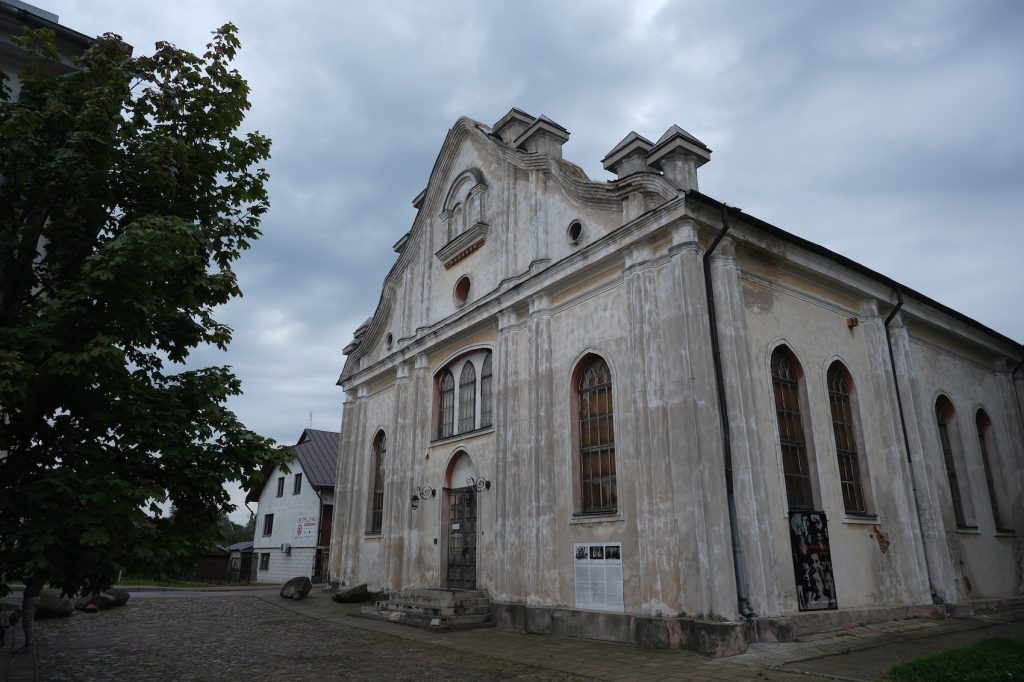
It all seemed far that weekend. We ate fish-filled pierogi and drank kvass at a lakeside restaurant by the Lithuanian border. The white wooden pavilion looked set out for a wedding, though it wasn’t. And if it was, it would’ve suited the scene just fine: people in dresses and dress shirts from small towns, off to Sunday lunch at a place with white tablecloths.
I noticed a Polish family on the table beside us. They sat in silence, heads bowed and hands in their laps as if in prayer. I who had raised his arms to heaven in search of a signal saw that they had found a hint of WiFi here, only to lower theirs beneath the table to swipe and scroll in unison.
The menus were in Polish and Lithuanian. The border was just a few hundred metres away, the clientele joined by passers-through. The road widened where once there had been a border crossing which was removed to fanfare when Lithuania joined the Schengen area. A few derelict concrete buildings remain. Now you can drive straight past, noting the changing font and language changes on the road signs.
Would you die for this place called the Suwałki Gap? Russian soldiers would have no say in the matter. But if they marched 65 kilometers, they’d sever the three small states from their NATO allies. Retaking them would be a feat by air or sea.
Kaliningrad feels close, and it is. A Russian passenger train with sealed carriages still crosses Lithuanian territory on its way to the exclave. Last August, a 21-year-old Russian man attempting to evade conscription managed to open the door and jumped from the moving train into NATO territory.
Driving into Poland from Lithuania, a sign on the motorway from offers an exit to “RU” on the right. Few take it; the crossing is closed to most traffic. Small yellow signs depict a black tank with numbers, a warning to military convoys about the load the road can withstand. It is a heavy burden in the Suwałki Gap.
Some analysts caution that Kaliningrad represents no such threat to NATO. They say Moscow has relocated many of its troops out of its Baltic exclave to continue waging war on Ukraine. They have other options further north, namely the Estonian city of Narva. But it’s too late for the Suwałki Gap – the name has stuck, so have the possibilities.
What does it do to a place to be told it holds the spark which will light the next inferno? Both nothing and everything. The poet Czesław Miłosz wrote that none of his fellow Poles in 1939 thought Germany would succeed in its conquest due to their strong conviction that God intervenes to help the just.
Miłosz would spend his childhood summers in the Suwałki Gap, at a lakeside family estate now just one kilometre from the Lithuanian border. It now hosts an NGO dedicated to cross-cultural cooperation, with a collection of Ukrainian refugee art.
The sounds of a brass band and female laughter became louder with each crunch of a step forward down the gravel path. The view of a small wedding party emerged in a gazebo on the lawn which rolled down to the water. The young danced and the elderly sat in the shade, dabbing foreheads with napkins. A cut-out silhouette of Miłosz surveyed the scene from the crest of the hill. I turned down their offer of a dance, so we shared a smile instead. But even here there are crises today, not just tomorrow – humanitarian crises which tumble ever further down the list of grander, geopolitical priorities.
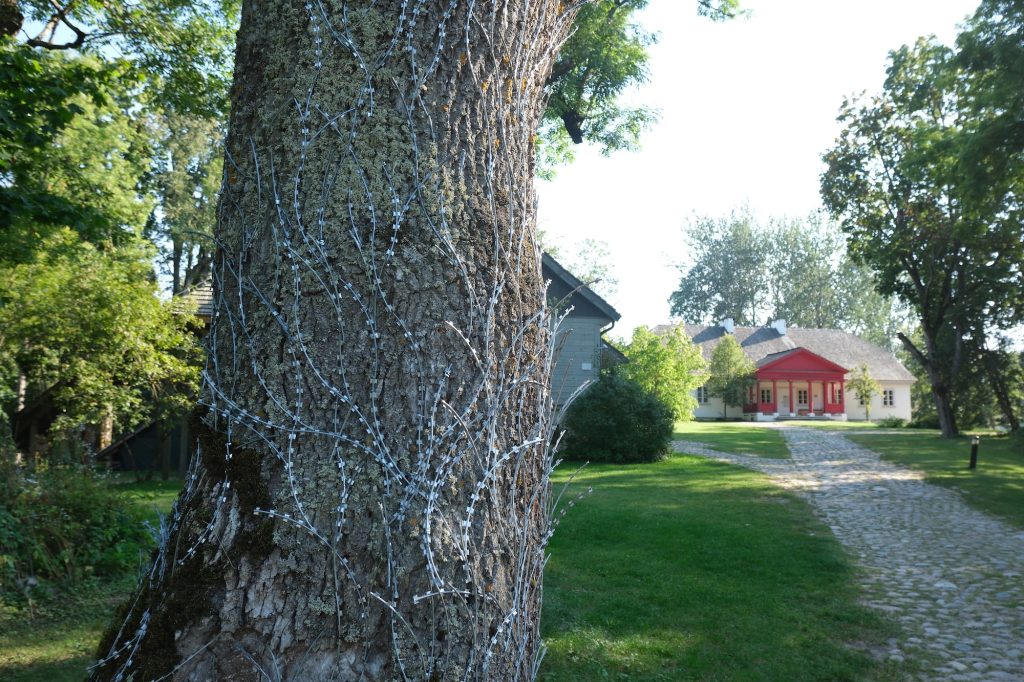
Near the estate’s red-painted portico and lakeside view, the artist Grzegorz Handerek has wrapped the trunk of an oak tree in razor wire. It is these blades which refugees leaving Belarus still face when traversing Poland’s increasingly deadly fortified border. So now they enter Lithuania instead, and from there slip through the 65 kilometers of the Suwałki Gap.
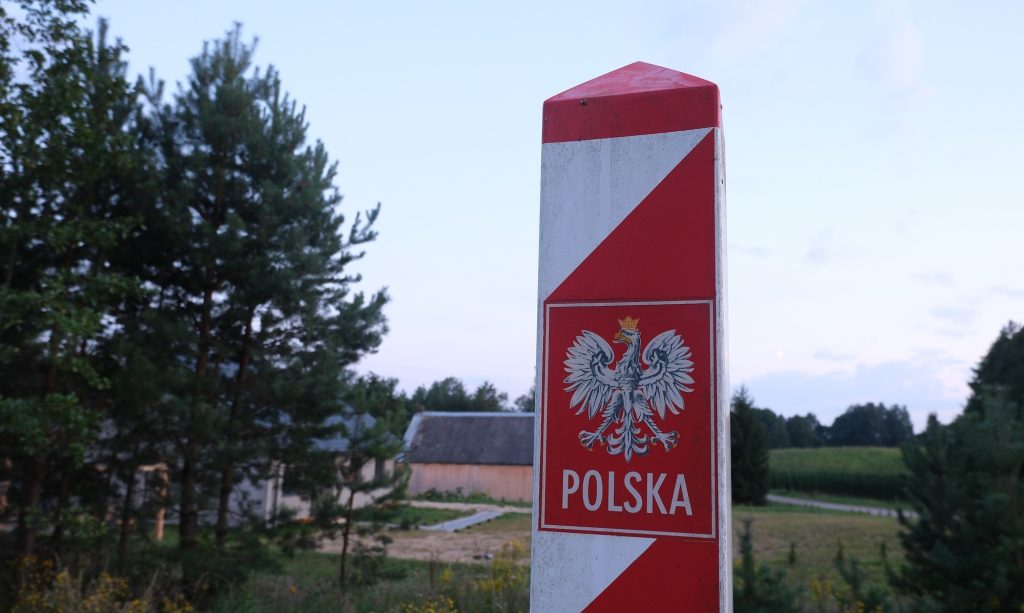
For them the gap is narrower still, it is the width of a river waded through moonlight or a hedgerow to sleep in, unseen. For them, the Polish border markers are no candy-cane ornament shared by allies but run blood-red. They still die in the woods.
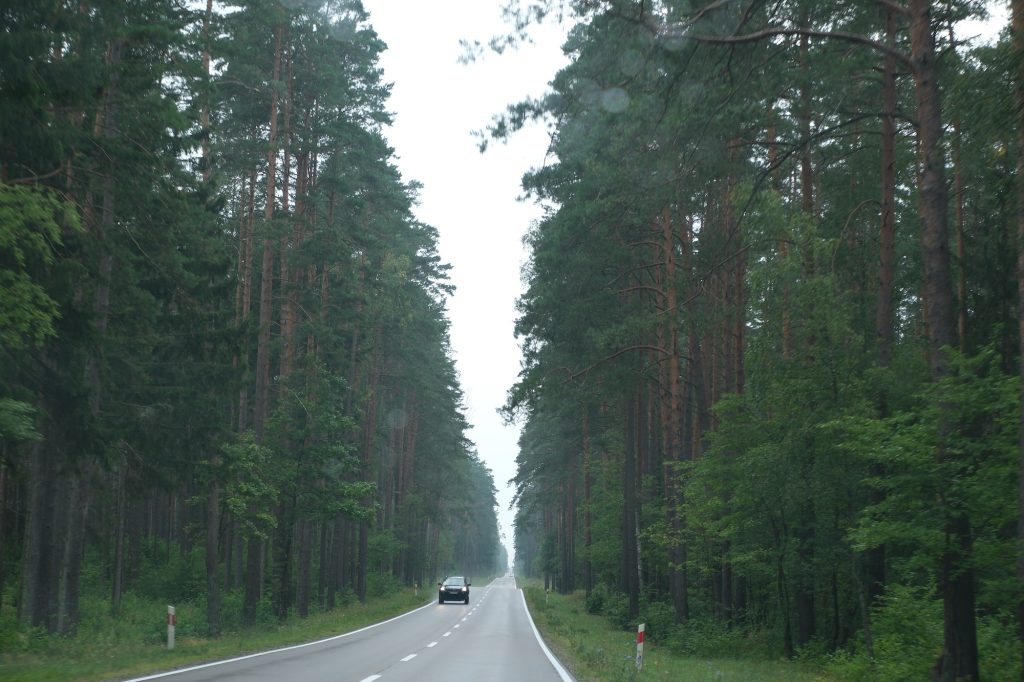
Some days later, driving back into Poland from Lithuania, the backroads became backtracks. With neither phone signal nor GPS, all that was left to us were two headlight beams and five senses to trace the way. Then in the bend of a forest road, marooned in the oasis of a spotlight, we saw a police car and a white van, empty, with open doors. Polish border guards sat drinking warm tea to fortify them for the migrant hunt.
We passed without incident and drove deeper into Poland. After some time we had left the rye bread and the wildflowers behind. Soon the bars climbed and we emerged to see signal.
By the time we reached Augustów, the push notifications pushed and the news notifications notified. They notified of Trump’s antics, the war in Ukraine, the memes of missed conversations. Are we really informed if we’re not paralysed?
Here, in the din of awful possibilities, was the Suwałki Gap I had imagined, perhaps on some level even wanted. To live vicariously through history, dripping down the matte screen and past my thumbs. It was all I had missed, there in the eye of the cyclone, lying content in a hammock somewhere outside Sejny.
We had left behind illusion and were whole again.
Incognitov is the pseudonym of a Warsaw-based writer. His Substack can be found here: https://thewuzetka.substack.com/
© Deep Baltic 2026. All rights reserved.
Like what Deep Baltic does? Please consider making a monthly donation – help support our writers and in-depth coverage of Estonia, Latvia and Lithuania. Find out more at our Patreon page.
