
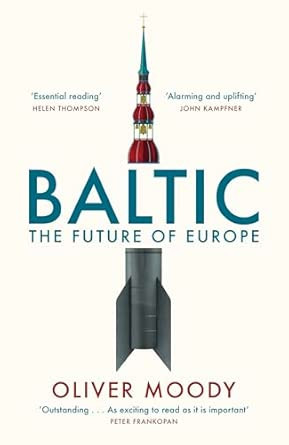
Oliver Moody is the Berlin bureau chief for the British newspaper The Times. His book Baltic: The Future of Europe, published last year, takes a broad look at the countries bordering the Baltic Sea and what they can teach those of us further west at a time of growing tensions with Russia. This situation is nothing new for most of these states, which long ago were forced to develop their own coping strategies, and have often shown considerable invention in doing so. He writes “For a Europe that often seems tired and conscious of its own relative decline, plagued by low growth and identity crises, the Baltic is also a source of ideas and optimism.”
As well as sketching out the background, he also zeroes in on most of the individual countries bordering the sea, choosing specific case studies to tell a broader story. From Estonia, which Moody calls “the most successful small European country in my lifetime” and its early success in integrating next-generation tech into state structures and everyday life, to Finland, where resilience and military preparedness have long been embedded into civilian life, and the complex question of Germany’s so-called Zeitenwende, a shift in priorities and stance announced by then-Chancellor Olaf Schulz in the immediate aftermath of Russia’s full-scale invasion of Ukraine. Not all are uncomplicated success stories: the chapter on Denmark, focusing on the remote island of Bornholm, draws attention to the severely polluted state of the Baltic Sea, while the section on Latvia highlights its sometimes vexed ethnic politics.
Widely acclaimed – The Financial Times referred to it as a “timely analysis” and “a series of well-researched essays” – some voices have nonetheless accused Baltic of painting an excessively rosy picture of life in these parts. Deep Baltic’s Will Mawhood spoke to Moody about the book, and what may have changed or intensified in the year or so since its publication.
You start the book with a moment that, it seems to me, is often quite forgotten in discussions of Russian actions. A couple of months before the full-scale invasion of Ukraine there was a demand from the Russian Foreign Ministry for NATO presence to be scaled back to its 1997 borders, so withdrawing from all the countries that joined after the collapse of Communism. You acknowledge in a footnote that this was quite possibly a demand that was so outrageous that it was made with the intention of being rejected. What’s your take on it now? How relevant do you think it is in understanding Putin’s goals in the region?
Inasmuch as we have, collectively as European elites, a standardised grand unifying theory of what it is that the Putin regime wants to do to the NATO countries, that is the thing that they keep coming back to. And it’s obviously more relevant than ever now because there have been some very strident warnings about Russian escalation – particularly out of Poland, but not only Poland, we’ve heard echoes in France and the Netherlands and Norway about some kind of attack on the Eastern front. It matters a lot what we think Putin is trying to achieve, and in particular whether this is a fundamentally imperialistic, revanchist ambition to try and reclaim territory that once belonged to the Soviet Union or the Russian Empire, or whether it is more about fragmenting, weakening, destabilising, humiliating, rolling back NATO as an alliance. And most of the European officials I talk to these days tend to the latter: they think this is far more about exposing the limits of NATO’s unity and above all of the level of commitment of the United States to the Article 5 mutual defence clause.
So I think we can definitely read that demand as a ridiculous, maximalist negotiating position that Russia’s representatives absolutely did not expect to see taken seriously. But at the same time it is the closest thing we have to a way of making sense of Russia’s overarching strategy towards NATO.
So that’s an aspiration, but maybe not the primary aspiration.
I think it is the primary aspiration. In the sense of how to ensure that NATO is no longer a meaningful military presence in Central and Eastern Europe. To my mind, and to the minds of a lot of the official sources I’ve spoken to, that’s not some kind of side objective; it’s the main quest.
Well we can come back to that, and what likely actions may be in a moment. I was curious, thinking about how you came on to writing the book, because you say you’d spent three years based in Berlin for The Times, but you hadn’t given the Baltics much thought. Do you think that was more a blindspot for you personally or is it more than it was one for Germany, or both?
I think it wasn’t just a blindspot for me or for Germany – it was a general blindspot for Western Europeans as a whole. I mean, British coverage of the Baltic states, despite the fact that we have – and had back then – the NATO battlegroup presence in Tapa in Estonia, since 2017, was very thin on the ground.
And I think my process of waking up to the importance of what’s going on around the Baltic Sea has very much happened in tandem with everybody else’s. I don’t want to make out that I’ve been some kind of pioneer in that respect. I think there’s been a general awakening to the fact that what happens geopolitically to Europe is very largely going to be decided in north-eastern Europe as much as in Ukraine.
Well that’s very clearly the argument you make in the book. I was curious because it’s quite obvious that Lennart Meri, the former Estonian president, is kind of a guiding spirit, I guess you could say, certainly a central figure for you in understanding the region and understanding a lot of the history. I was wondering if you could tell me a little bit about what particularly appealed to you in his thought.
What I particularly like about Meri is that when you go back to what he was saying quite openly in the 1990s, it was blunt and direct and very colourful, but it also correctly diagnosed the contours of north-eastern European geopolitics – and in particular the prospect that Russia’s ambitions towards its Western neighbourhood were still there and would still be there indefinitely, a long time before anyone in Western Europe cottoned onto that.
I guess I also very much like Lennart Meri’s depth as a thinker, as an essayist and anthropologist. He absolutely had a hinterland that’s not very common to heads of state or government in Europe today, and I’m sure that would have in some way enriched and deepened his thinking about geopolitics.
You talk a lot in the book about the idea that the Baltic broadly defined is the future for all of us – including the UK, Germany, etc… Do you think it’s possible to create out of nothing or out of very little the kind of – I think the term you use is “whole-of-society” or “whole-of-government” preparedness that you have in a country like Finland, for example?
It’s very clear from your chapter about Finland that this is something that derives from decades and decades and decades of historical experience and cultural experience. Is that something you can just slot on top of a country like the UK, or is it something that will take a long time, or is it possible?
I think that’s absolutely a central question of the present, to which the answer remains very much open. The roots of that collective understanding – and I think I’d go as far as to call it a different kind of social contract from what Western Europeans are used to – are not just in the historical trauma of invasion and occupation by Russia, but also in the necessity of having had to basically rebuild the state from scratch: in Finland’s case after the end of the Continuation War, in the case of the three Baltic states after they regained their independence.
And we don’t have many examples of states that have been able to do that without going through that kind of hard reboot. The one example we do have is Sweden, where certainly the Germans and the Brits spend a lot of time studying their civil defence and disaster readiness models – but then even the Swedes will privately acknowledge that they are nothing like as far down that road as Finland is, particularly in terms of societal awareness and broader preparedness going down into the corporate sector and to individuals.
So now we’re in a position where there are large parts of, for example, the British and German state that would absolutely love to adopt something like a Finnish comprehensive security model and keep running up against the fundamental problem, which is that the resources aren’t there, the collective understanding and threat perception in the population are not there, the readiness in the corporate world to embed all of these assumptions into its planning is not there, and that is fundamentally because the threat perception is not sharp enough. So I think if we are going to succeed as Western Europeans in adopting a more kind of Finnish/Baltic way of doing this, and I think we have to, then absolutely the first thing that has to happen is a much clearer sense of what is at stake here directly for people in Germany and the UK, if the worst comes to the worst.
For you specifically, being a Brit who is or at least was mainly covering Germany: it does often seem that Germany is the country in the last decade that has had the biggest slide in perceptions – certainly in the UK. And I was wondering if, speaking as you were before about Meri, whether it would be fair to say that the Baltics always placed the least faith in this consensus that existed – the kind of “end of history” idea, to put it crudely [Moody quotes Meri declaring, in a critical speech to the Bundestag in 1995: “The new Molotov is already there […] He is waiting for the new Ribbentrop”]. And if Germany put the most faith in it, and is now seeing the downsides of that. I don’t know how clearly I’ve formulated that.
No, I think you’ve formulated it very clearly, and I think it’s very largely true. Thomas Bagger, who used to be the foreign policy adviser to the German president, once wrote in an essay that Germany was the end of history nation par excellence. It was a very kind of vulgarised version of Fukuyama’s thesis that took hold in the German establishment, because it also happened to overlap with Germany’s conception of its national interest, as a trading nation which stood to benefit from a world in which basically everyone pretended that there was no conflict.
And I think it’s definitely true at the same time that the “end of history” sounds like a ludicrous proposition from the perspective of the current generation of elites in the Baltic states, who have been through exactly the opposite of that. Because they often would have had grandparents or great-grandparents who were caught up in the Soviet deportations of the 1940s, they themselves would have been educated, at least initially, in a kind of russified, Marxist education system, and then to have had that experience as a teenager or a young person of moving into freedom and watching living standards dramatically increase and watching geopolitics tectonically shift around you. I’m sure it must have felt more like the beginning of history than the end of history to have lived through the 1990s under those circumstances.
One of the arguments in the book that’s really important to me is this idea that that experience has given particularly the elites in the Baltic states – but not only them, in places like Poland as well – just a fundamentally different sense of political time. First of all as something that is quite urgent and that is constantly slipping through your fingers, and secondly as a process of change that is not just inevitable, but also that you can shape to your advantage and that we’re not just like passive bystanders in the grip of these broader historical forces, that you can actually take the initiative and shape that change.
Well, one thing I certainly noticed, on your comment about elites in the Baltics, who I think in some ways like everywhere do sometimes have a slightly different perception – subtly different, not always completely different – from other residents. But you say, for example, on the chapter on Lithuania where you quote Žygimantas Pavilionius [then chair of the Lithuanian parliament’s foreign affairs committee], where he talks about the changes he’s seen in his life, [comparing his current wealth, influence and happiness with the first salary he received at the foreign ministry in the early ’90s, five US dollars a month] – you say “this is a part of the world where the concept of the future still holds real meaning for many people”. And certainly for me as a Brit living in the Baltics, that’s something very noticeable, that the middle classes broadly – it’s changed a little bit arguably – are very optimistic, and expect life will be better in the future, whereas I would say in the UK at least, even quite middle-class people, people doing quite well, that’s not really true.
And I wonder how much that is a prerequisite – not just that you’re doing OK personally, but that you feel your life is getting better, which is something that’s much harder for a country like Britain to provide.
Yeah, I mean, if you look at surveys from Germany and the UK and the United States asking people whether they would like to live in the present or in the future or in the past, I believe in all cases – certainly in the German and British cases – there are pluralities if not majorities who would prefer to live in the past, even among the young people, which is crazy to me. And that feels like a very new phenomenon, where even the people in their twenties and thirties have a kind of deep scepticism that things in the future will be better than they are now or have been in the past – and that really feels to me like a reversal of the trajectory that everyone thought they were on for at least a large part of the 20th century in Western Europe and in America. And I do also think that greater openness to the future in the Baltic states in particular, but also really in Poland, that you mentioned is to a large extent a material phenomenon that really can’t be decoupled from the fact that real living standards have doubled or trebled or in some cases quadrupled over the past 36, 37 years.
I don’t think it is possible politically to set out a convincing vision of the future that does not include an account of how things are going to get tangibly better in people’s sense of how rich they are, of how much money they have to spend, how many things they can get with their money, how hard it is for them to afford the basic necessities of life.
Because speaking about messaging related to the assessment which I think both of us share of the threat from Russia – even though I certainly agree with the basic diagnosis, much of the messaging I’ve seen for example from the military has been very blunt and really quite aggressive. I saw something the other day, there was someone from the military who was interviewed who said something like “well, you will want to defend your country when Russia invade and there are Chechens running up the street stabbing people or shooting people.”
And I felt like – well, firstly, this is not going to happen: it’s very unlikely there will be a ground invasion of Britain. And secondly, I’m not really sure that’s how you get through to people – just saying “well, deal with it – this is going to happen”. Maybe that’s just one specific example, but I feel I’ve certainly seen other examples of what seems to be really bad communication, particularly from the British military, intelligence side. It may be [the case] in other countries; I’m less equipped to judge.
Having spoken to people who are dealing with this stuff in the British and German militaries, I think they are very deeply frustrated at what they perceive to be just a profound blindness and complacency, not just in the civilian population but in the political leadership in their countries. And I think that is what leads them sometimes to make quite crass and unnecessarily apocalyptic statements.
There are much smarter ways to do it – I keep thinking about this podcast that Sky did called The Wargame, where they imagined a series of Russian cruise missile strikes on Britain and then played it through with a bunch of former senior politicians and military officers, just to see what the processes would be, what it feels like to imagine a Kalibr missile hitting Oxford Circus [in London] or GCHQ being wiped out. And I think there are ways of getting people to viscerally have a sense of what is at stake without inducing panic and telling them that the Russians are coming and it’s all going to be dreadful. I think that kind of twilight space of the scenario can be a very helpful way of doing that.
But the other really important dimension to this that I feel has been neglected in Western Europe, and in Germany in particular, is alliance defence and solidarity. Like really conveying to the public that if the shit hits the fan, we are going to have to be fighting for our allies, and giving people a strong sense of why those sacrifices and the danger to the homeland that is going to come with them are worth making.
Going back in a way to the discussion about Germany, I was interested in your chapter about Latvia – which seemed like a noticeably sympathetic take; I mean, Latvia’s generally presented as being NATO’s weak link, which I think is pretty accurate. But I appreciated that you actually described the citizenship and language laws correctly, which is unbelievably rare among people writing about it.
You’re quite candid at the same time about a lot of the problems Latvia has had with integration, with the existence of a parallel society to a certain extent. But you do say that you think the country is cohering and that there is a place for what is essentially a state with nationalism at its core. The quote I’ve got is “Latvia only exists today because of a peaceful ethno-nationalist movement”, which is completely true.
But I think it’s something that particularly Germans in my experience, but probably other Western Europeans too, tend to find very hard to understand or very hard to accept because they see nationalism as something almost irredeemable. Do you think these gaps in historical experience can be bridged between a country like Latvia, where nationalism exists for – even if exaggerated [in some cases] – for reasons that are quite understandable, and other countries where maybe it’s more tainted?
And is that a good thing or a bad thing for Latvia ultimately – is that something to draw on?
I think it’s really important to draw a distinction here between nationalism and ethnonationalism, and the difficulty with Latvia is that the two are very closely adjacent – and that ethnonationalism from the ethnic Latvian side has in many ways been a broadly benign force. And there are a lot of countries elsewhere in Europe that have never had that experience, and where nationalism is much more decoupled from ethnonationalism. I’m thinking in particular of Germany.
Whether that gap in historical experience can be bridged – I don’t know if it has to be. What we are all being confronted with across Europe, as right-wing nationalist forces tend to get stronger electorally is that mainstream parties are also having to think about national identity and how they formulate brands of patriotism in ways they didn’t have to before. And so they end up, often I think, with very similar answers to the answers the Baltic states have found to these questions, just by a very different route. So, for example, in Germany the elites are now having to think about their Russian and Turkish and Syrian minorities in ways that are, historically speaking, completely different to what happened with the Russian-speaking minorities in the Baltic states, but end up looking remarkably similar in the here and now.
So I think there is a convergence that is just being forced on everyone by circumstance, and so I don’t think that the different historical experiences make that much difference. For me, the absolutely decisive question looking at the near future is whether we’re going to succeed collectively in finding forms of nationalism that compel people, that make enough of the population ready to play along with it, to identify with the state, to make sacrifices for it, but that are also capable of co-existing with other broader forms of identity. And I think the Finns, for example, have been really good at this, in terms of embedding a very mild form of Finnish nationalism, a sense of themselves as a Nordic country and a European country, and now as a NATO member. And I think the Baltic states have also been really quite good at it, on the whole.
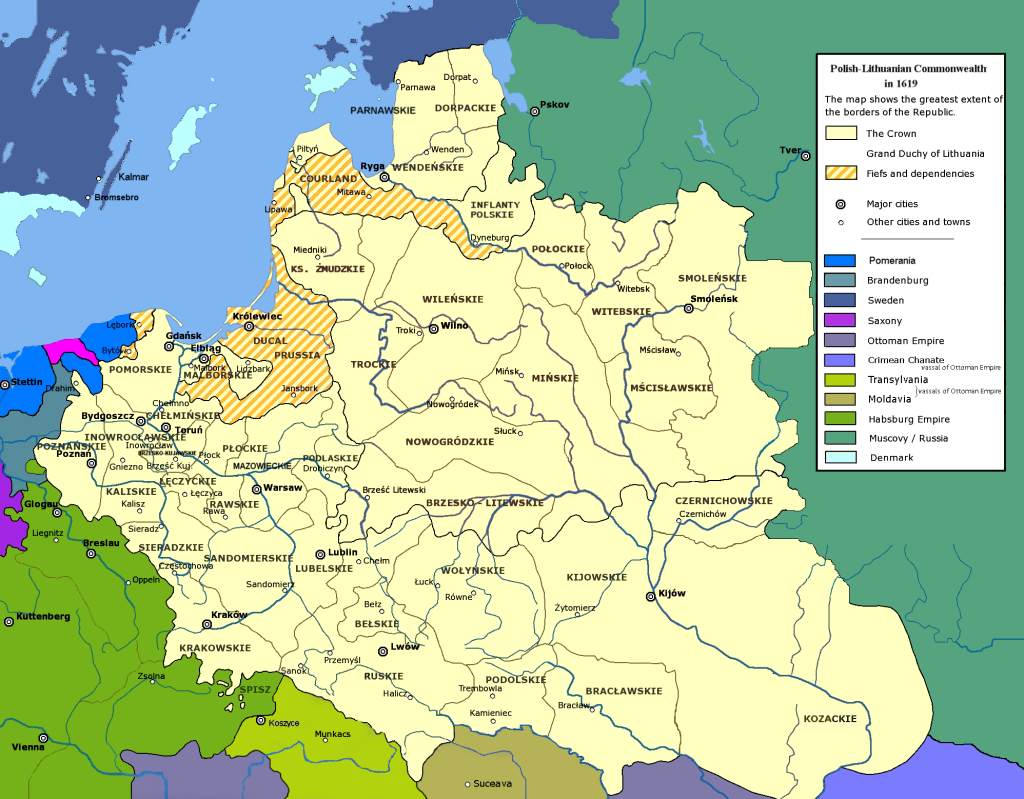
Going back into the history a bit, because you do speak quite interestingly about the overlapping and different histories of all these countries going back quite a long way – it struck me especially in your chapter where you speak about how, in many ways, Poland is not a maritime nation and didn’t really even have language to talk about the sea, because it’s been cut off from the sea for most of its history. [Moody writes, “After the Second World War, Poland acquired nearly 450 extra miles of Baltic coastline, which was more than it could initially digest”, and observes that much of its seafaring vocabulary has had to be borrowed from other languages.] Which I would say is also true of Lithuania, definitely compared to Latvia – absolutely not a maritime nation, for the same reason.
[Historically speaking] it strikes me you’re really writing about two overlapping concepts really with Baltic – you’re writing about a kind of “old” Baltic, which is kind of Hanseatic League, German-speaking and you’re also writing about the northern bits of this older, Catholic, Polish-Lithuanian concept, which has very little to do with the sea and doesn’t really know what to do with it.
That’s not a thought that’s ever occurred to me or a thing that anyone’s ever asked me before. I deliberately confined the history in the book, with a few exceptions, to stuff that has happened since the 19th century, because otherwise it would have been a thousand pages long, but also because it would have been very difficult to construct a coherent narrative that would have sustained its relevance to the present in a disciplined way.
With all of the Hanseatic traditions and the Polish-Lithuanian Commonwealth, I am absolutely alive to them as deep undertows that occasionally become perceptible in contemporary culture and geopolitics, and also as things that people occasionally refer to as cultural touchstones – but they don’t strike me as being really massive determinative forces in the 21st century. They’re interesting history, but I don’t get the sense as an outsider that Hanseatic identity is really a thing, or even that the Polish-Lithuanian Commonwealth really has that much power to move people in Lithuania or in Belarus or in Ukraine these days.
I would disagree about Lithuania, but that’s a whole separate conversation.
If you look at it purely ahistorically and just imagine that the history of the Baltic Sea region started in about 1989, you can construct a perfectly coherent version of regional convergence and political and economic military that makes just as much sense as a unit of identity as going back to the Hanseatic League or the Polish-Lithuanian Commonwealth would in the present.
Your book, in terms of the politicians you highlight in the region, tends to mostly focus on figures who even for the Baltics are more on the hawkish side with regard to Russia. Because we do have… well in Latvia you obviously have the Russian minority parties, but you do also have ethnic Latvian politicians who are much softer on Russia and talk about the importance of trade and so on. Do you think that the trajectory is in a direction that is favourable to the argument you’re making?
Because for example the Lithuanian government, which you speak about being very hawkish with regard to China in particular, has changed and I think the current government is not continuing that stance. And certain politicians who are known internationally for being very hawkish – such as [former Estonian prime minister] Kaja Kallas, [former Lithuanian foreign minister] Gabrielius Landsbergis is another example, often really quite unpopular locally. Do you think this under threat even in the Baltics – what’s your take on where this will go?
I don’t think that the unpopularity of Kallas or Landsbergis domestically had a lot to do with their hawkishness – I think it had much more to do with their manner and style of leadership as domestic politicians. I absolutely accept the broader premise of your question though. Certainly on the China question, Lithuania has turned around pretty much 180 degrees since the Homeland Union-led coalition lost power a couple of years ago. In Latvia – you’ll be much closer to the current election campaign than I am [this interview was conducted before the Latvian parliamentary elections on 3rd October] – but it strikes me when I look at the polls that forces that are a lot more questioning of the general approach to Russia and the EU and NATO have been getting a bit stronger, particularly in the form of Latvia First and Sovereign Power. And in Estonia, obviously while the Reform coalition that Kallas started is mutatis mutandis still there, there are obviously still strong undercurrents that question that geopolitical trajectory.
I still fundamentally think that there is enough of an elite consensus in all three about the threat from Russia that I am fairly optimistic that it will hold. But at the same time I don’t mean to dismiss the existence of pretty powerful countervailing forces, certainly in the domestic politics of Latvia and Lithuania, and to a lesser extent in Estonia too.
I guess you’ve probably read Owen Matthews’ review of the book. It’s a largely positive review but does say at one point that you’re painting an excessively rosy or uncomplicated picture, giving examples of Latvian conscription into the Nazi military – I struggle to follow his argument a bit here because as far as I can see you do give a completely accurate account of its existence and extent – the fact that Kaja Kallas’s father Siim was a fairly high-flying Communist party member, and the treatment of the Dozhd [TV Rain] outlet during the time they were based in Riga (again, you do mention this, so I assume he thinks you’re not sufficiently condemnatory).
Whether or not these specific points are fair, it strikes me that one of the consequences of the lack of knowledge you refer to is not only that often more or less undiluted Russian propaganda gets into the public sphere, but that often the Baltics’ own narratives aren’t really scrutinised, just because there are few outside the region really qualified do so. For example, the Estonian economy has really been struggling for several years, going back to before the full-scale invasion – it may now be picking up, but even within Estonia there are economists questioning the wisdom of continuing with their longstanding model (you highlight their near-allergy to taking on debt). Lithuania has taken a somewhat different path and has been doing very well. But I haven’t really seen much awareness of the former in international media, other perhaps than in very specific economic coverage – often the prevailing Estonian narrative of an unambiguous ongoing success story is just taken as read. Do you think this is fair, and is your book contributing to it if so?
This has been a thread running through several reviews of the book – one of them said certain sections read as though they had been written by the paramilitary wing of the Estonian tourism board, or words to that effect.
It is an entirely fair criticism. From the first chapter of Baltic, I was very open about the choice to largely endorse and present the narratives that the elites in the Baltic states like to weave about their own countries. That is not because I’m blind to the dark sides of these countries. I absolutely recognise the alienation, the polarisation, the demographic decline, the blind spots in the memory politics and the self-serving conduct of some elites. I don’t pretend they are utopias, and I did try to include the more difficult and problematic aspects of the Baltic countries.
But I made the choice to emphasise the narratives of success, innovation, resilience, foresight and strategic culture because I think they are basically true and the rest of the world needs to hear them. In wider western discourse they are often drowned out by doom-mongering about shrinking populations, supposedly mutinous Russian minorities and scenarios for a ground invasion of Narva or the Suwałki-Alytus corridor. I’ve also found that in the Baltic state themselves people can be very pessimistic about the direction of travel. But I think that what these three countries have achieved since 1990 is genuinely inspiring and worth learning from.
By the way, I don’t understand why some critics seem to think Siim Kallas’s early career in the Estonian communist party is a kind of trump card that invalidates his legacy or exposes Kaja Kallas as some kind of hypocritical “red princess” who never knew the true burdens of life under Soviet occupation. For me his economic reforms in the late 1980s were a really interesting case study in how bright and ambitious Baltic politicians were able to exploit the openings provided by glasnost and perestroika, and use the Soviet system for their republic’s advantage. I see him as a fairly benign example of the generation of northeast European political leaders who took a more pragmatic and morally complex approach to navigating the transition between the two eras, like Aleksander Kwaśniewski in Poland.
It’s interesting that although you very deliberately title and frame it as “Baltic” rather than “Baltics”, and the majority of the country-specific chapters do not concern the Baltic states as the term is generally used, most of the coverage and interviews I’ve seen you do seem to focus to a very large extent on the Baltics – is this just because they’re at greater threat, or more because they’re seen as more terra incognita?
I really wanted this to be a book about north-eastern Europe as a whole, that bound Germany, Poland and the Nordic states into a macro-regional analysis. But a lot of the coverage of it has focused on the Baltic states because they are the countries that interviewers kept on asking about.
I still don’t quite understand why that is. For a while, I thought maybe it was a linguistic quirk in English – people see the word “Baltic” and reflexively add the word “states”. But it also happens all the time in Germany, where the book is called Konfliktzone Ostsee and the Baltic states are collectively referred to by a completely different term, das Baltikum.
I suspect you’re right that there is an element of exoticism and unfamiliarity about the Baltic states for a lot of people outside the region, and perhaps sometimes that even shades into a kind of orientalism. There has also been so much apocalyptic speculation about them as the flashpoint for a possible NATO-Russia war that they have probably stuck in western Europeans’ minds as a source of anxiety in a way that Sweden, Finland and Poland haven’t.
Personally, though, I find Sweden, Finland and Poland every bit as strange and interesting as Estonia, Latvia and Lithuania – the Nordics in particular may feel vaguely familiar to a lot of Britons or Germans or Americans but in reality they are so much more peculiar and harder to understand than people realise. As an old Berlin hand, I also found it really interesting and enlightening to look at Germany as a Baltic Sea country.
Returning to Germany, you wrote, in a review of Broken Republik [by Chris Reiter and Will Wilkes, subtitled “The Inside Story of Germany’s Descent Into Crisis”], a highly critical account of contemporary Germany, “half of the foreign journalists in Berlin seem to be compiling excoriating reports on everything they believe is wrong with modern Germany”. It does seem the malaise goes beyond the kind of intellectual misapprehensions among the elites we were discussing into the fabric of society, and a failure to keep up with the challenges of modernity – and you give plenty of examples in the book. While in many ways the problems in the UK seem deeper, it does also seem to me we’ve had a long while of them being front and centre in public debate, while I’m less sure this is the case in Germany (though I may be wrong). We’re obviously speaking not long after the AfD swept regional elections in Saxony-Anhalt. Do you feel confident Germany can fundamentally hold together and find workable solutions, and is an alliance of the kind you discuss feasible without the most populous EU member?
I think there’s a certain symmetry between the difficulties in the UK and Germany at the moment. In both countries, public opinion is tending towards generalised pessimism about perceived national stagnation or decline, and cynicism about the capacity of conventional politics to remedy the situation. They share a pervasive sense that “nothing works here any more”, that the costs of basic things such as housing, energy, food and transport are getting out of hand, that there is no realistic prospect of a return to the kind of growth in living standards we were accustomed to before the 2008 financial crisis, and that the political class as a whole is corrupt, detached from ordinary people’s concerns, and incapable of fixing any of these problems. You can see from the detailed polling that large numbers of the voters who are turning to the radical left and right are no longer doing so purely as a temporary protest against the mainstream, but because they have fundamentally lost faith that the standard toolbox of policies can make anything meaningfully better.
But I do think the British and German electorates’ blind spots are in slightly different places. In the UK the central issue is fiscal. Most people recognise that the state is fundamentally broke but seemingly can’t yet bring themselves to accept that this entails either substantial tax rises or broad cuts to already threadbare public services.
Germany, on the other hand, has a markedly lower debt-to-GDP ratio, lower borrowing costs and a much stronger tradition of fiscal conservatism. Its problem is more on the level of identity. There are entire industries that it more or less invented – cars, chemicals, machine tools – where it is now not just being outcompeted by China but also seeing domestic companies outsourcing production to neighbouring EU countries with lower input costs. At the same time, it has had to let go of a comfortable geostrategic model where it could pursue a kind of cod-Bismarckian Schaukelpolitik between the US, China and Russia, pursue doux commerce with just about any partner, and neglect hard power.
These changes are pretty much inexorable but they have been poorly explained to the electorate. Crucially, Germany’s political leaders have also failed to set out any kind of compelling vision of a future that might justify sacrifices and sweeping change in the present. Instead, Friedrich Merz, the conservative chancellor, has spent a lot of time admonishing the voters to eat their greens with no prospect of pudding afterwards. He also has an unfortunate habit of casting structural problems as moral failures on an individual level, portraying German employees as workshy and hypochondriac. But he isn’t solely to blame for his government’s spectacularly low popularity. It is also a product of a broad coalition of the centre right and centre left that is terrified of alienating interest groups and stuck in a kind of zero-sum game where one partner can only gain ground at the other’s expense.
Until recently I used to be unfashionably confident about Germany’s political resilience. I thought the “firewall” against the AfD would probably hold at least until the next Bundestag election in 2029 and the radical right’s gains at the recent state elections would shock the parties of the centre into formulating a bolder reform agenda and better strategies of communication. So far, though, the signs are pointing in the opposite direction.
What worries me most is that I don’t get the impression the German elites recognise the scale of the challenge that the AfD poses to the country’s post-war “fortified democracy” system. They tend to assume that because large parts of the party are categorised by this system as anti-democratic, extremist and a threat to the constitutional order, it is somehow a foreign body in the German polity. That misses the evident mass appeal of the AfD’s own understanding of democracy, which is majoritarian, ethnonationalist and built around the mystical will of the German Volk – a brand of democracy that has proven very successful and disruptive in the UK. So my concern here is that if and when the firewall does break and the CDU does begin to work with the AfD, the rupture in Germany’s system could be extremely fast and uncontrollable, because the mainstream parties don’t grasp the potency of what they are up against. There is no knowing whether this will happen; the situation is highly volatile and unpredictable. But I believe we need to start thinking in terms of worst-case scenarios.
A government with the AfD as its dominant element could have really bad consequences for Germany’s partners in Europe. The party has given every indication that it would cheerfully chuck Russia’s NATO neighbours under a bus in the interest of restoring full relations with Moscow. There is also a risk that Germany’s increasing military power and centrality to the logistics of European defence could be weaponised against its allies for coercive purposes, much as Trump has weaponised America’s power against the Europeans.
I appreciate this sounds alarmist, and maybe it is, but I think other northern and central European countries should contemplate the possibility of a world in which Germany might not just absent itself from a defensive alliance against Russia but actively seek to undermine it.
Regarding Putin and previous leaders’ plans and feelings about the region you’re writing about. I appreciated that you emphasised threat perception from the Baltic side is by no means something new – you clarify there was an atmosphere of tension even in the early ‘90s, with considerable difficulty and complicated negotiations involved in getting Russian troops to withdraw, especially from Latvia. It’s often seemed to me listening to his rhetoric that he has a quasi-historical and almost mystical conception of a kind of eastern Slav unity – I’ve not seen a great deal of evidence that the Baltics, or their NATO neighbours, have much emotional significance to him, despite the evident hostility shown by him and other Russian nationalists to their existence in their current form. And while the Russian narrative for domestic consumption about the justification for occupying Ukraine is fairly clear, if absurd, I’m not quite sure I understand what it would be for occupying the Baltics. Does this indicate that an actual occupation is not among the options being considered – and obviously there could be aggression without the intention to occupy that much territory – or is this all just completely wrong?
I took a fairly extended look at these ideas in the Russia chapter of the book. Fundamentally, I suspect it is all what the Germans call Kaffeesatzleserei – trying to read the future in coffee grounds. But sure, aside from Putin’s habit of styling himself as the reincarnation of the “gatherer of the lands” Peter I, neither he nor his chief ideologues ever seem to have shown much conviction that the peoples of the Baltic states are inalienable limbs of the Russian nation. On the contrary, there is every reason to suspect that occupying them would be a giant pain in the backside for Moscow, with the potential for their resistance movements to spread separatist contagion across the periphery of the federation.
If you believe Putin’s central objective towards Europe is to somehow break NATO and reestablish something resembling a Russian sphere of influence, you could also argue that invading and occupying the Baltic states is just about the riskiest and most stupid way to try and achieve that goal. But I’m not a prophet and I can’t see inside Putin’s skull.
At the time we’re speaking there’s been a recent upsurge in attention to the region, with quite widespread concern that we’re facing an imminent invasion, based on rather doubtful evidence. The Baltic foreign ministries and prominent supporters of the Baltics internationally have been placed in the odd position of, essentially, accusing others of alarmism, and calling for cool heads. And certainly many of the people making these claims online clearly have almost zero awareness of the context, because some of the things they’re positing are very improbable to impossible. Does this demonstrate that anything at all has changed since when you were writing the book?
This is an important point. On the whole, I really admire the Baltic states’ strategic communication. It is not easy to tread the line between forcefully conveying a sense of the urgency and existential stakes to your allies on the one hand, and reassuring your own population and foreign investors on the other, but they have made a pretty good fist of it. They have also been brilliant at making it clear that the threats and pressures they face from Russia are not an isolated problem on the eastern flank but a danger that affects the whole of NATO – and in some ways that this gives them a first-mover advantage, because they are the first to develop strategies of resilience against it.
What has changed since the book came out is Donald Trump’s return to the White House. He has not just eroded the political dimension of NATO deterrence; he has necessitated contingency planning for the defence of Europe in a scenario where the US does not show up to protect its allies.
That is a horribly invidious situation for the Baltic states. The US security guarantees they obtained with NATO accession have been – from my perspective – not just strategically but emotionally central to their trajectory since they restored their independence. That means the challenges they face in adjusting to a world where those guarantees may be profoundly unreliable – or even used as leverage to coerce them – are not just diplomatic but conceptual. I find it wholly understandable that they seem to have been so wary about engaging, even on a clandestine level, in the conversations that some of their neighbours are driving on how the Europeans could operate without the Americans if they had to.
But this has left them in a real communicative bind. They clearly have a strong imperative to try and uphold deterrence by insisting that the transatlantic axis is still basically fine and a Russian ground invasion of their territory would be futile, even while some of their European allies are signalling the opposite. Just on the day we’re having this conversation, Denmark’s military intelligence agency has publicly raised the risk of an imminent Russian incursion into a “limited area” of adjacent NATO territory. The result is an absolute shambles of mixed messages across the alliance, which allows hysteria and misinformation to flourish.
But – and I’m not going to make myself any friends in the Baltic governments by saying this – I worry that it also reflects something like an omertà about the extent to which Trump has fractured the alliance, which risks putting them on the margins of the new hard power structures that are starting to emerge in Europe. In other words, I suspect the clashing messages may be a symptom of a deeper divergence that is not necessarily develoing to the Baltic states’ advantage.
Finally, as you say writing the book was obviously a voyage of discovery for you to a large extent – and it’s impressive how much reading you’ve obviously done in what must have been quite a short space of time. Were there any places, or even cultural experiences, that left a particularly strong impression on you that you’d like to single out?
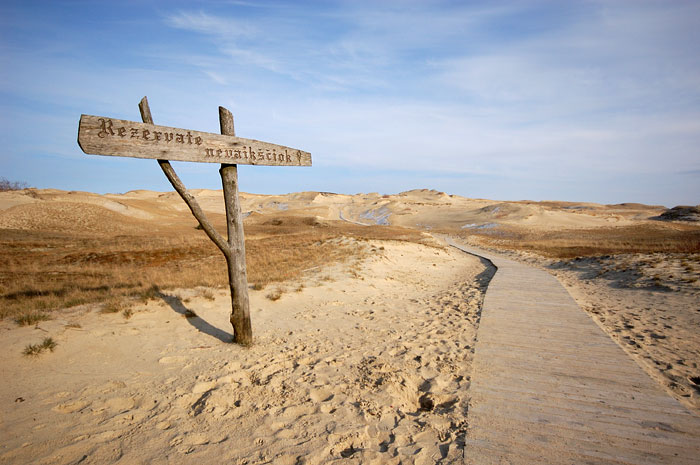
After the 2023 NATO summit in Vilnius, I took a coach to Klaipėda on a whim, hired a bike and set out to cycle across Neringa/the Curonian spit and get as close to the Kaliningrad border as I could before I was turned back by the guards.
I’d read so much about the place in German literature as a kind of Sehnsuchtsort, or locus of otherworldly longing, including Thomas Mann’s famous essay about his summer house at Nida. That world has clearly vanished but what remains is an extraordinary self-contained universe and an almost painfully beautiful landscape. I loved it.
Baltic: The Future of Europe is available now from John Murray Press
© Deep Baltic 2026. All rights reserved.
Like what Deep Baltic does? Please consider making a monthly
